Quem mora aqui | Who Lives Here
Série | Series I
A pergunta que uma fachada faz e não responde | The Question a Façade Asks but Does Not Answer
DEZ OBRAS · FOTOGRAFIA · ARQUIVO 1978–2026
A casa mostra.
A pessoa fica dentro.
A fotografia não insiste.
A AUTORA
Um assunto que atravessa cinquenta anos
Paulistana, Luiza Whitaker fotografa há mais de cinquenta anos. Veio do design e de duas décadas como diretora de arte, e trouxe de lá um olho adestrado para a decisão que a maioria das câmeras não toma: o que deixar fora do quadro. Esta série é feita quase inteira de subtrações — a rua cortada, o entorno eliminado, o chão que não entra, a parede que sobrava.
O assunto que a organiza não foi inventado para ela. Gente em janela, gente em sacada, gente à porta de casa é, por declaração da própria artista, um tema histórico do seu trabalho: algo que ela fotografa desde os anos 1970, em vários países, sem que ninguém tivesse ainda reunido essas imagens sob um nome. O arquivo que sustenta a série vai de 1978 a 2024, e a montagem do conjunto se deu por reconhecimento — a artista percorreu o próprio acervo e identificou o que já pertencia ali.
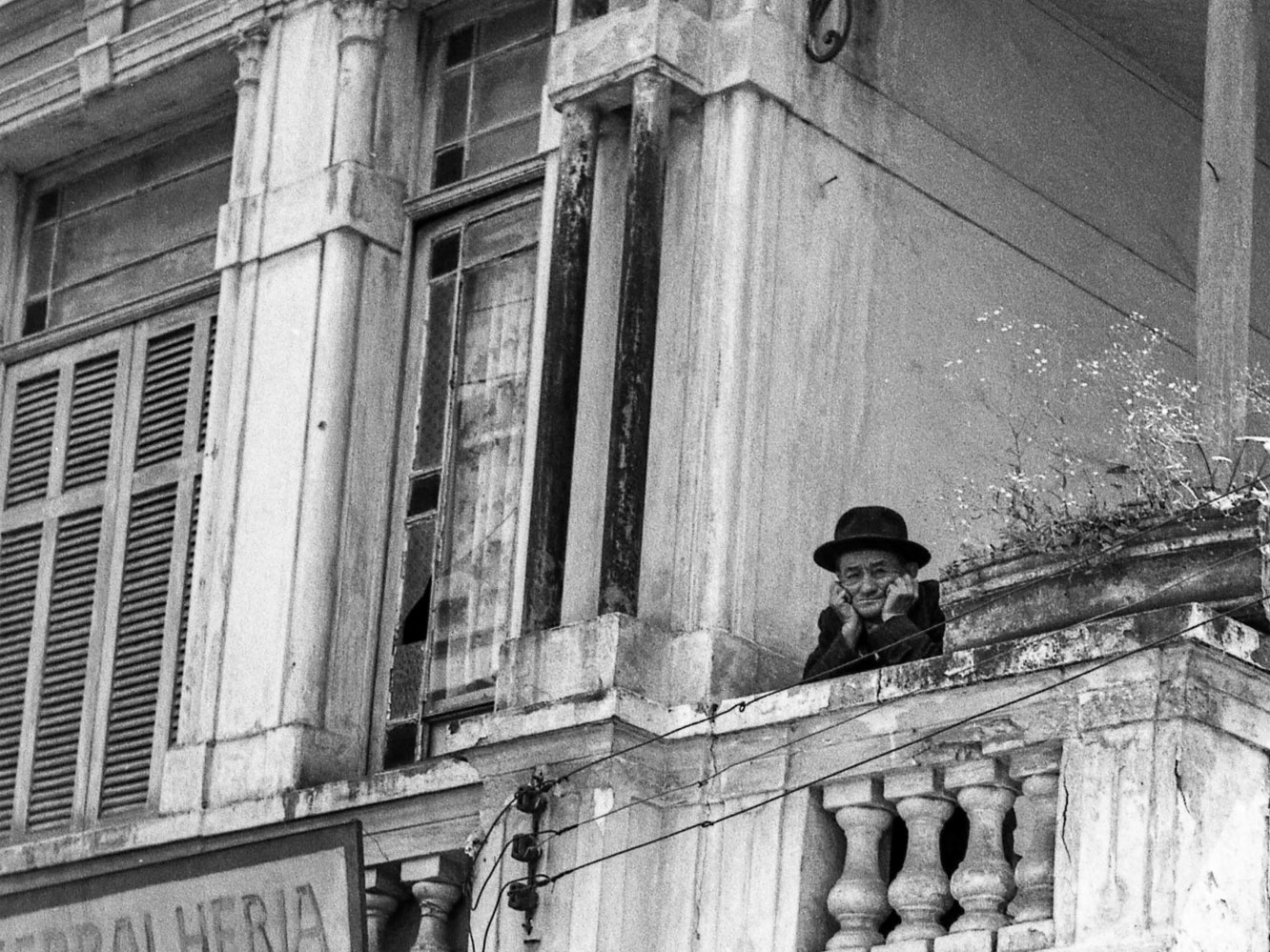
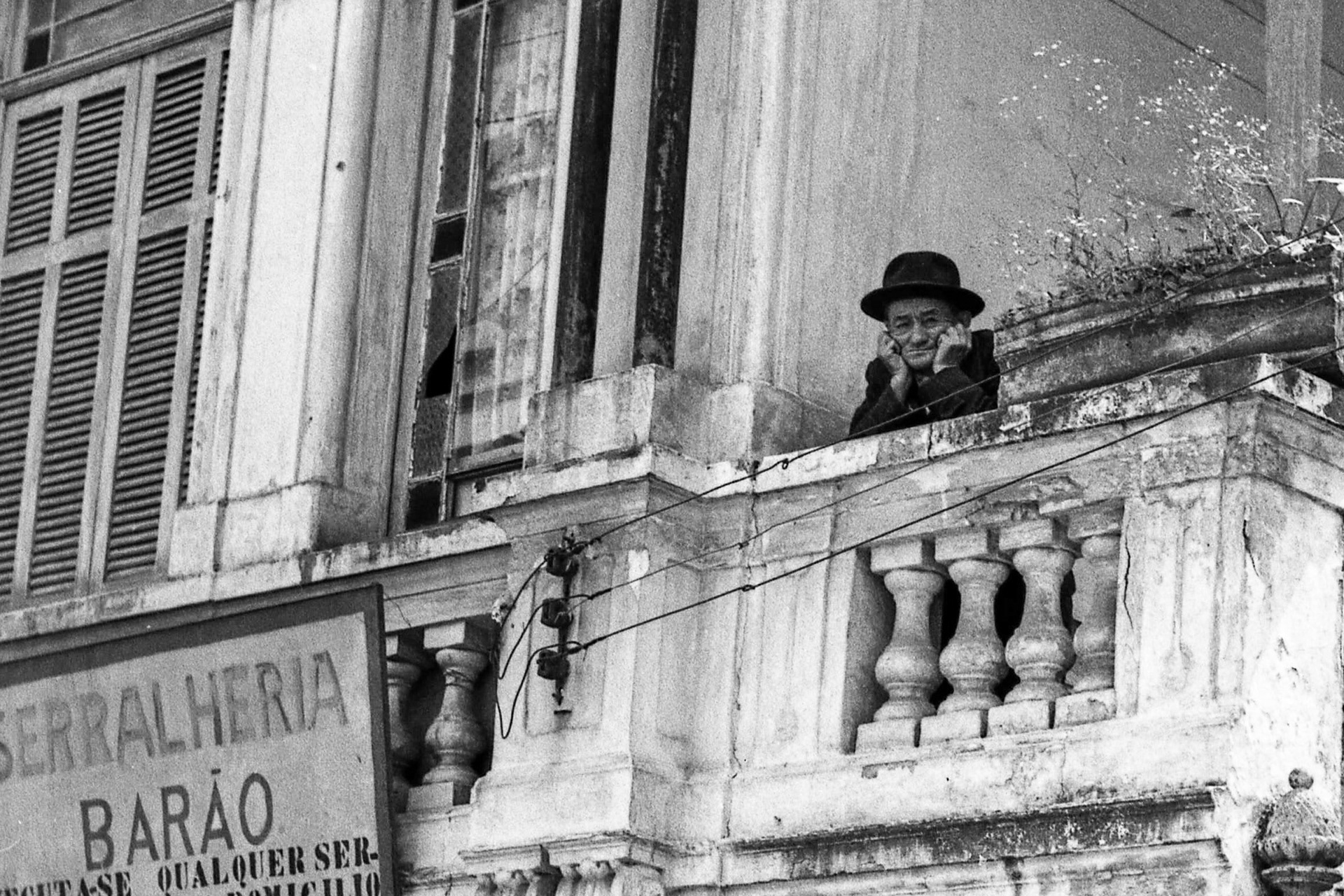
Também as ferramentas mudaram sem que o olhar mudasse. Nos anos 1980 ela andava com a máquina dentro do carro e parou em fila dupla por causa de um homem de chapéu numa balaustrada; em 2021 fez sete ou oito cliques com o telefone no tempo de um sinal fechado. Meio século separa um gesto do outro, e são o mesmo gesto.
A SÉRIE
Uma pergunta que fica de pé
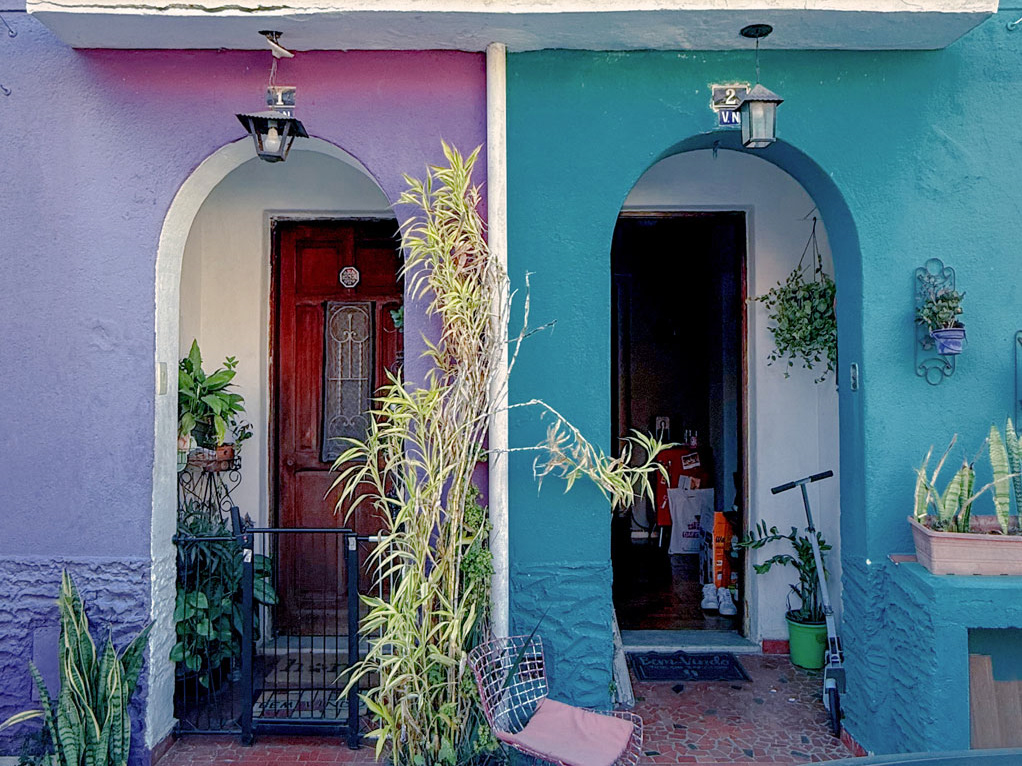
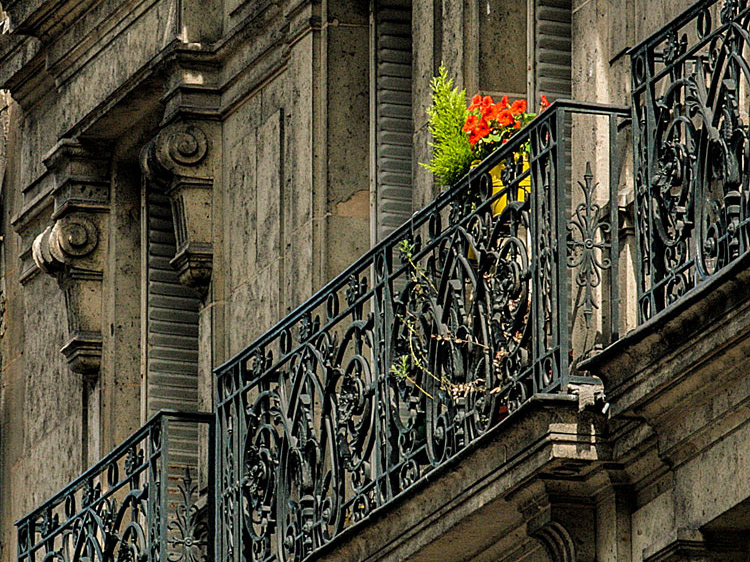
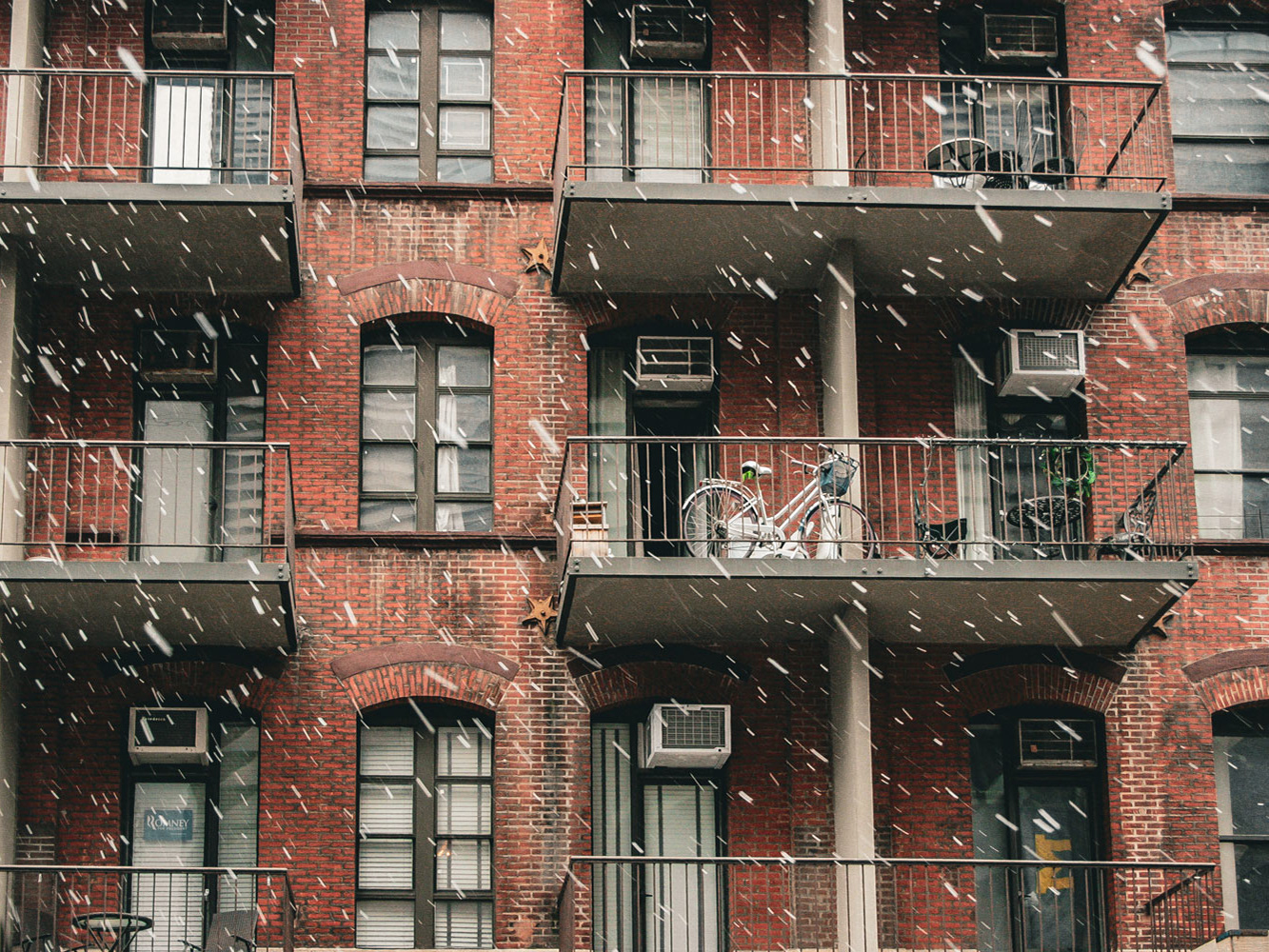
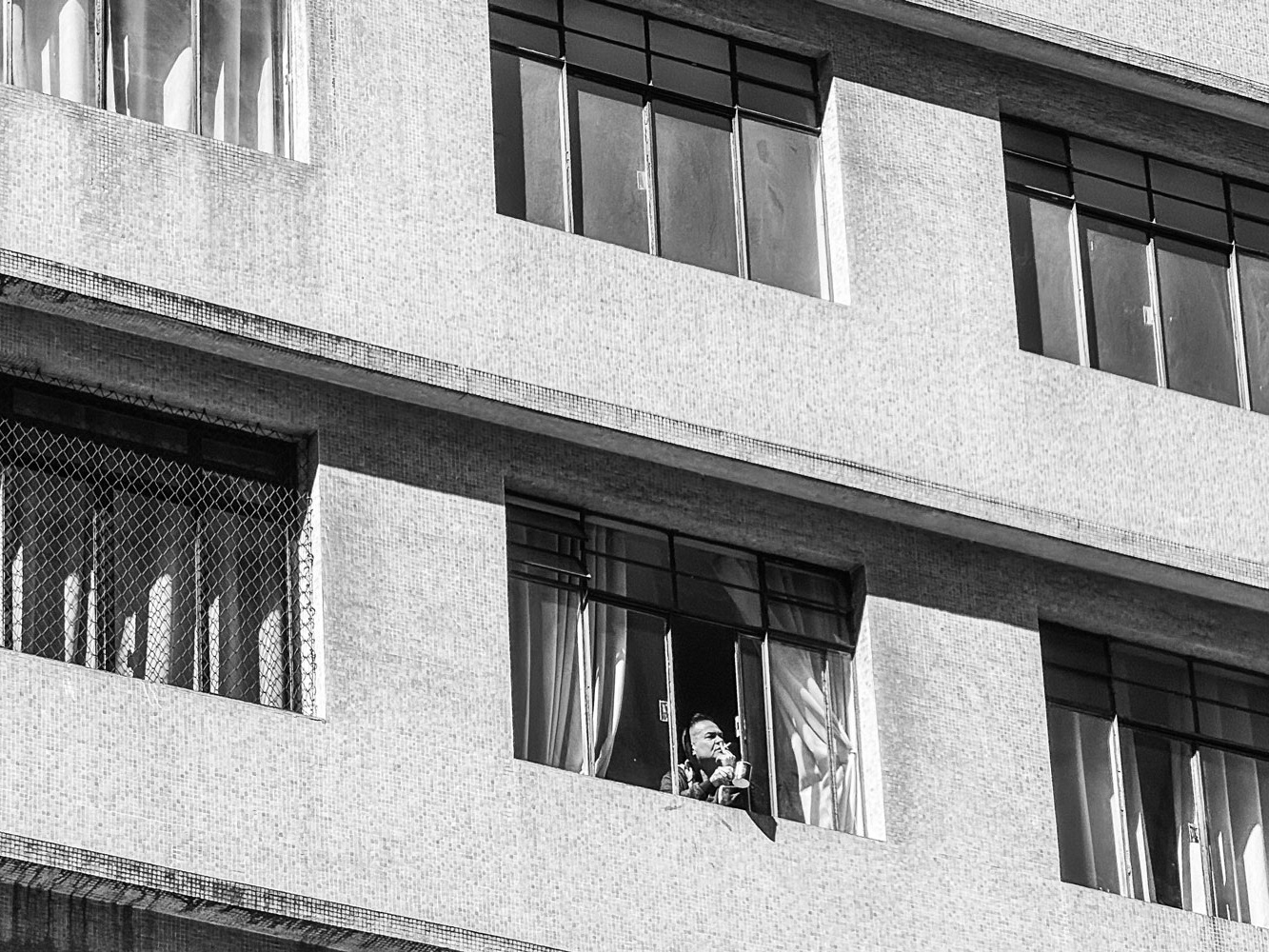
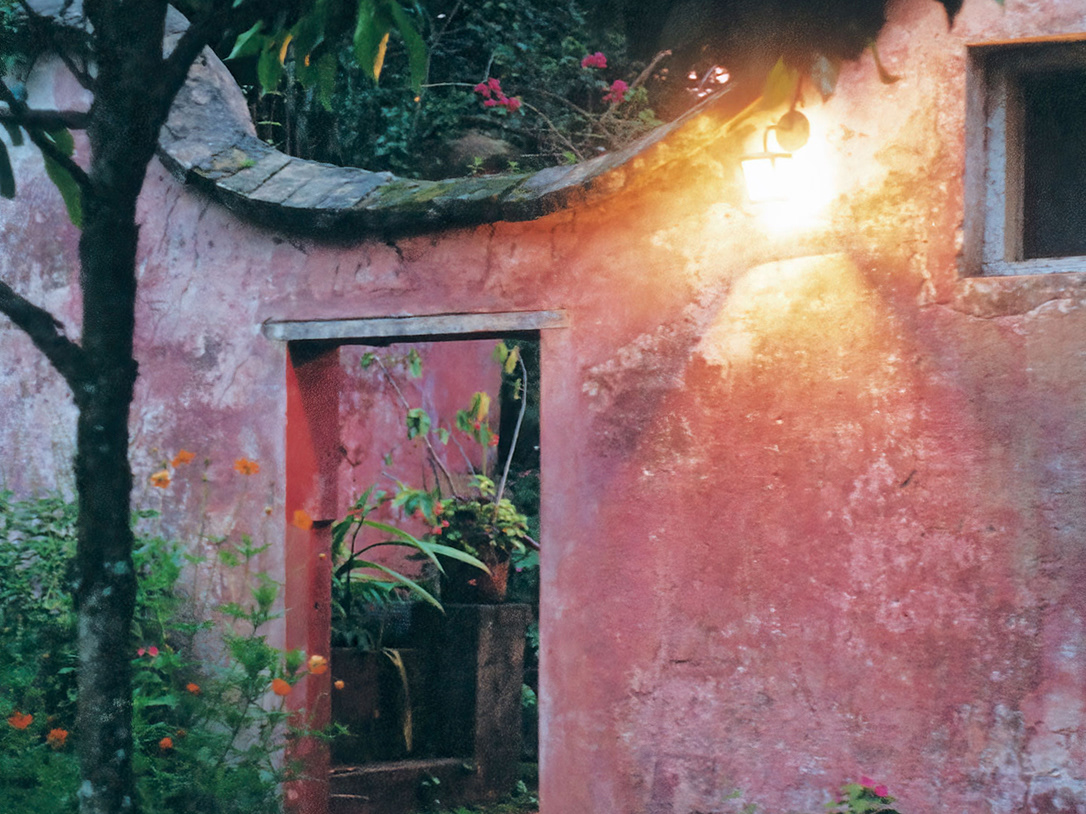
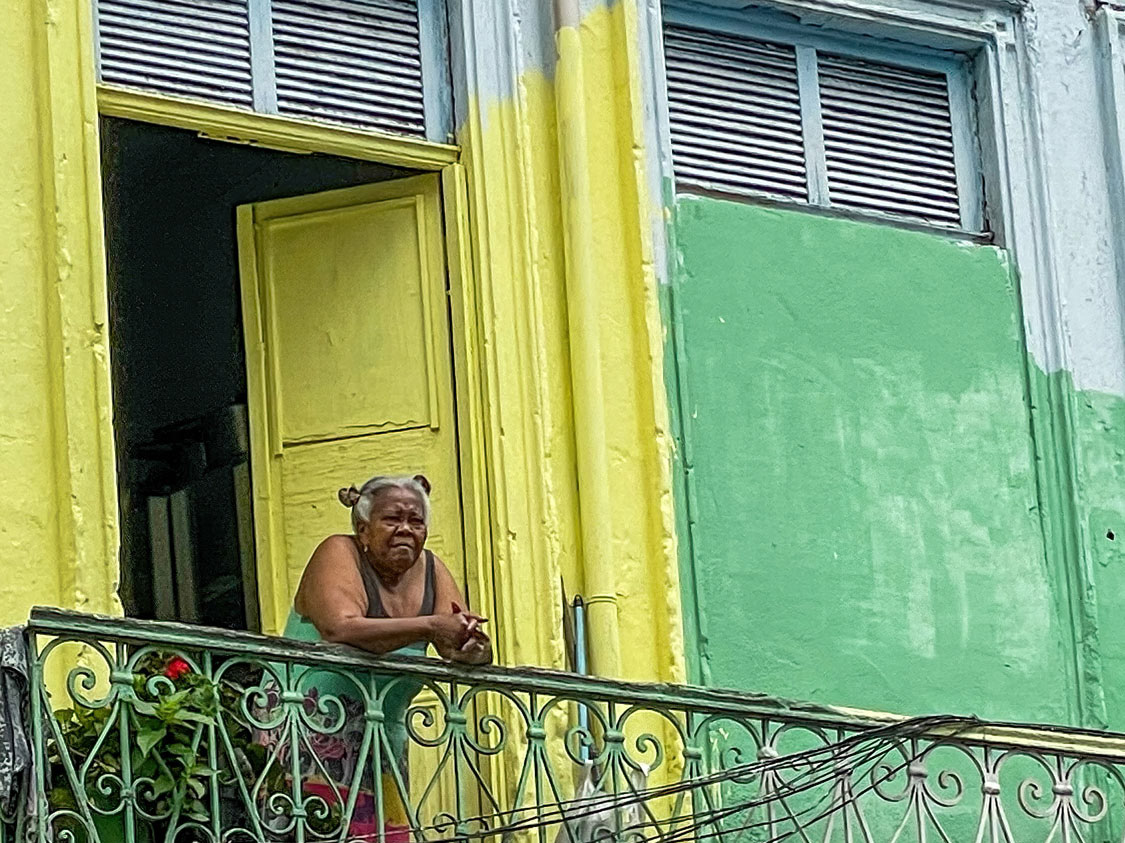
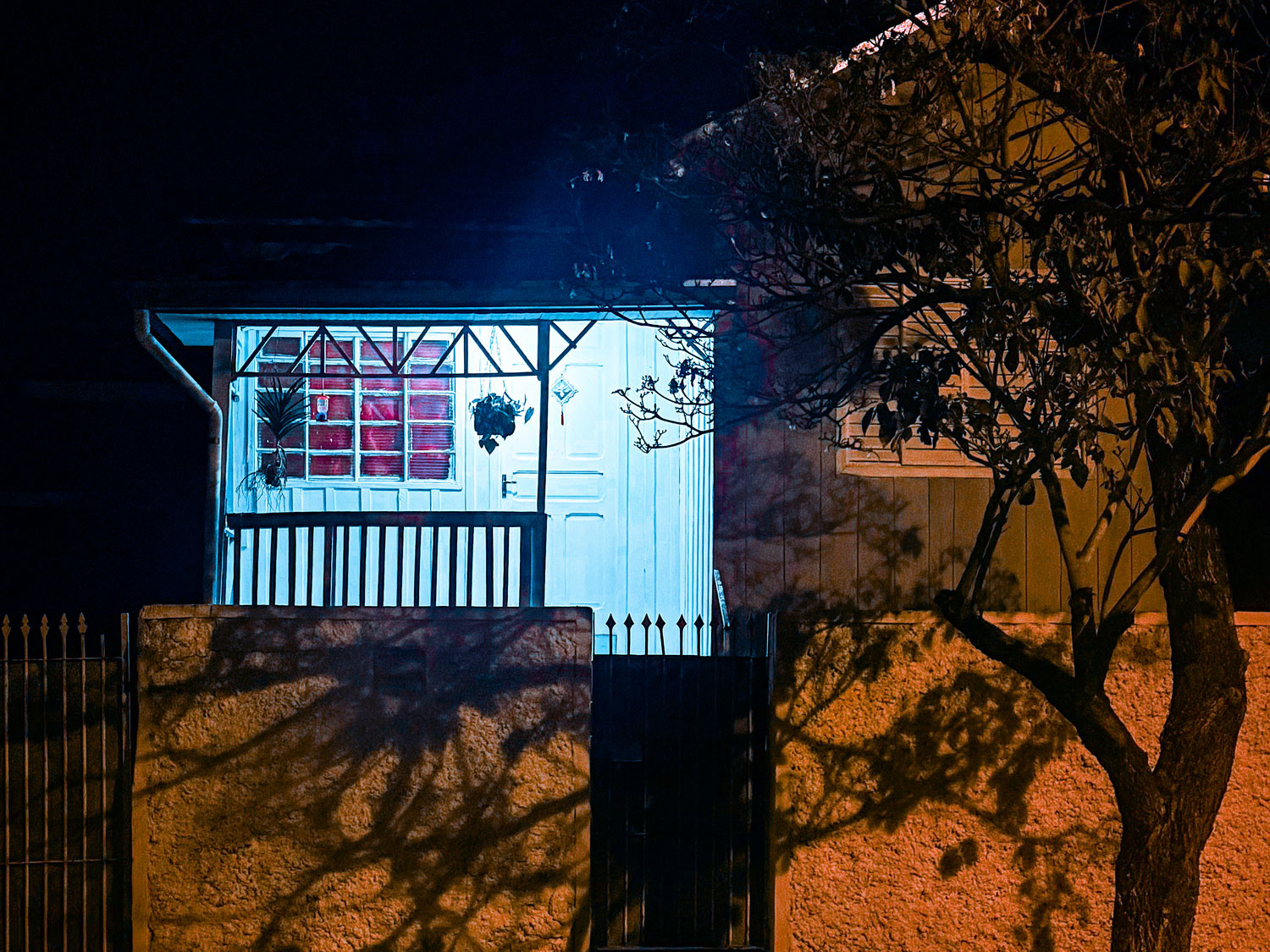
Quem Mora Aqui reúne dez fotografias de casas alheias vistas de fora. Uma lâmpada acesa antes do escuro, um vaso florido no alto de uma parede de pedra, uma varanda que a luz da rua tinge de azul, duas fachadas geminadas que são o oposto uma da outra, uma bicicleta abandonada à nevasca: cada imagem afirma que existe alguém do outro lado, e nenhuma diz quem.
A dificuldade que a série assume é sustentar uma obra sobre uma pergunta, e não sobre uma resposta. Fotografar quem mora numa casa é fácil — basta bater à porta. Fotografar a existência de alguém sem entregar essa pessoa exige que toda a informação venha da superfície: da cor que o morador escolheu, do objeto que ele deixou na sacada, da fresta que abriu para o gato enxergar a rua. A fachada vira retrato por delegação.
Dez fachadas afirmam que alguém mora ali.
Nenhuma diz quem.
Nenhuma diz quem.
O MÉTODO
Dois regimes, e uma edição que dura anos
O primeiro traço do método é a convivência de dois modos de trabalhar que costumam excluir-se. Existe aqui a imagem tomada em segundos, sob pressão de trânsito ou de sinal, com o enquadramento resolvido antes de a mão subir; e existe a imagem preparada, vista numa noite e feita na seguinte, ou montada de antemão até a última linha que divide o quadro. A artista chama uma dessas de instintiva e descreve a outra como super pensada. As duas estão no mesmo conjunto, e a diferença entre elas é só o tempo disponível.
O segundo traço é menos visível e mais decisivo: quatro destas dez obras foram determinadas depois, longe da rua. Uma existe por um corte que eliminou um portão e um táxi e converteu cena urbana em retrato. Outra foi escolhida contra a versão mais espetacular da mesma cena, porque a versão espetacular perdia a casa. Uma terceira substituiu um quadro que a artista já havia publicado. Numa quarta, o critério de seleção não foi técnico: foi a atitude de um gato. Rever, e mudar de ideia, é parte do trabalho.
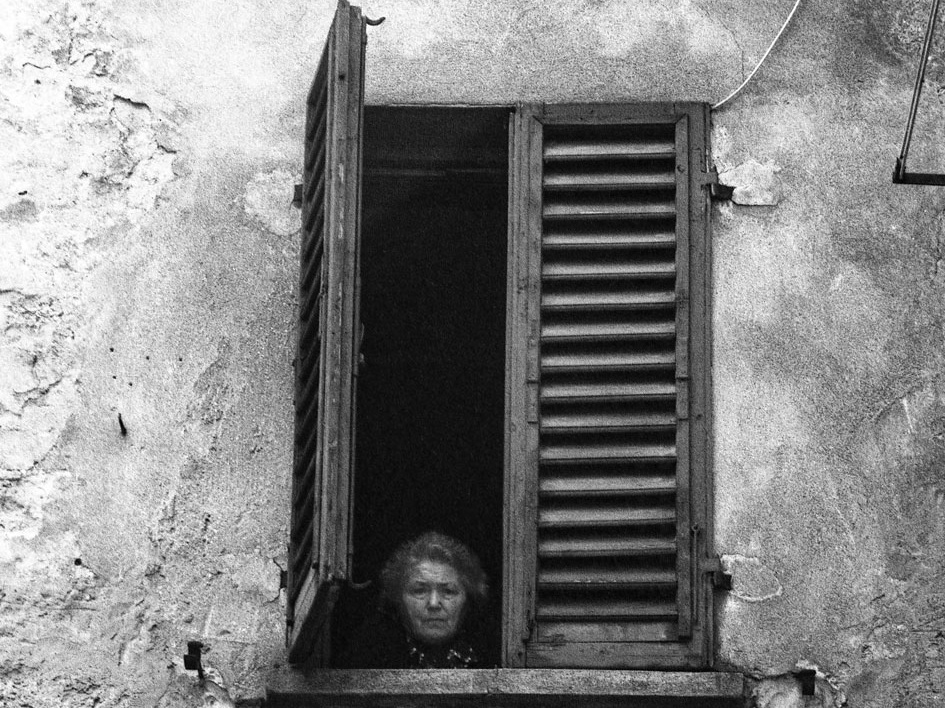
O terceiro traço é uma conduta. Fotografar alguém que percebe estar sendo fotografado é algo que custa a esta artista, e ela o registrou sem atenuantes. Daí o procedimento diante de pessoas — um disparo, nenhuma insistência, a distância preservada. Quando uma moradora recuou para o escuro do quarto ao ver a lente, a fotografia guardou o recuo e não foi atrás.
O quarto traço é uma abertura. Duas vezes, ao longo destas dez imagens, o aparelho acrescentou algo que os olhos não tinham visto — um halo em torno de uma lâmpada, em pleno dia; a neve convertida em riscos por um obturador que demorou a fechar. Nos dois casos a artista reconheceu que o resultado superava a intenção, e assinou.
Ela não flagra o instante.
Ela decide, muitas vezes anos depois, qual instante fica.
Ela decide, muitas vezes anos depois, qual instante fica.
A LINHAGEM
As famílias em que a série se inscreve
A linhagem de Quem Mora Aqui não é enfeite: é o que dá a estas imagens contexto, referência e a capacidade de durar. São cinco as famílias que se cruzam aqui, e nenhuma é imitada — todas são habitadas.
A figura no vão. O motivo da mulher à janela atravessa a história das imagens desde a Antiguidade e tem em Girl at a Window, de Rembrandt, o seu marco maior; a figura debruçada na grade vem das Majas al balcón de Goya e do Balcon de Manet; o gato no peitoril tem em Hiroshige a sua estampa célebre. É a família da abertura da casa ocupada por quem olha para fora.
A fachada como corpo habitado. Todd Hido fotografou casas de periferia à noite, sem ninguém à vista, iluminadas só pela luz que já existia no lugar; Andreas Gursky mostrou que uma superfície aparentemente morta se anima quando se reconhecem nela pessoas e móveis; Edward Hopper pintou o morador solitário diante de uma fileira de janelas iguais. É a família do edifício lido como criatura.
A tipologia e o vernáculo. Bernd e Hilla Becher provaram que semelhanças e diferenças só aparecem quando dois exemplares do mesmo tipo são postos lado a lado; Luigi Ghirri fez da cor de uma parede comum um assunto inteiro; Walker Evans dedicou a vida às tabuletas e às letras de rua; Paul Strand procurava os sinais da longa convivência que dá a um lugar a sua qualidade própria. É a família do detalhe que denuncia o morador.
A luz que não estava lá. René Magritte alterou uma única regra dentro de um mundo reconhecível ao acender uma lâmpada sob um céu de dia; Julia Margaret Cameron recusou a convenção de que a boa fotografia é a tecnicamente perfeita; Alfred Stieglitz esperou três horas numa nevasca e fez aquela que se tem por primeira fotografia de neve. É a família em que o aparelho e o acaso são aceitos como autores.
A superfície entre o olho e a casa. A Nova Visão dos anos 1920 tornou a sombra uma forma autônoma e usou o enquadramento para desfamiliarizar o conhecido; Lee Friedlander fez do vidro uma camada onde reflexo e transparência se sobrepõem. É a família do que se interpõe entre quem olha e quem é olhado — e nesta série o que se interpõe nunca é removido.
Sob todas corre o mesmo limite:
a soleira, que a fotógrafa não atravessa.
a soleira, que a fotógrafa não atravessa.
AS DEZ OBRAS
Três movimentos
A numeração das obras é de catálogo, e segue a ordem em que foram documentadas. A leitura do conjunto, porém, se organiza em três movimentos: as casas em que ninguém aparece; aquelas em que o morador se mostra na abertura; e as duas em que a posição se inverte e quem olha para fora é o de dentro. O que segue não é descrição: é o julgamento do que cada obra acerta e da razão de estar aqui.
MOVIMENTO I · A CASA SOZINHA
MOVIMENTO II · A CASA E O MORADOR
MOVIMENTO III · QUEM OLHA DE DENTRO
POSICIONAMENTO
Por que esta série importa
A pergunta como assunto. Quase toda fotografia de gente promete revelar alguém. Esta promete o contrário, e cumpre: mostra até onde vai o que se pode saber do outro olhando de fora, e para ali. É uma posição incomum num mercado saturado de intimidade exposta, e é ela que separa o conjunto de um levantamento de fachadas pitorescas.
O par com a série anterior. Quem Mora Aqui e O Que Sobra formam um díptico exato, e é raro um artista chegar a uma galeria com duas séries fechadas e documentadas que rimam desse jeito. Uma fotografa o que fica depois que a vida passou por um lugar; a outra, a vida que ainda está lá dentro e não se deixa ver. Ausência e presença, as duas do lado de fora da porta. Juntas, sustentam uma individual com narrativa e linhagem já resolvidas.
O que o colecionador leva. Quem adquire uma destas obras não leva a fotografia de uma casa bonita. Leva uma pergunta que continua funcionando na parede — porque nunca se saberá quem mora ali —, ancorada numa linhagem que atravessa Rembrandt, Hiroshige, Hopper e Gursky, e num assunto que qualquer pessoa reconhece: a curiosidade pela vida alheia e o limite decente dessa curiosidade.
AS DEZ JUNTAS
Meio século na mesma calçada
Vistas em sequência, as dez fotografias formam mais do que um conjunto de imagens fortes: formam uma insistência. De 1978 a 2024, em quatro países, com câmera de filme, com celular, do carro parado e a pé, a artista repetiu o mesmo gesto — parar diante de uma casa alheia e tentar entender quem está lá dentro sem tocar na campainha. Cada obra se basta; as dez, juntas, revelam que aquilo nunca foi um tema, e sim um hábito de meio século.
E a série não fecha a pergunta. Se tudo o que uma casa entrega é uma cor escolhida, um objeto esquecido, uma luz acesa cedo demais, então talvez conhecer alguém seja sempre isto: ler sinais de fora e completar o resto por conta própria. Luiza fica na calçada. Enquadra o que a casa quis mostrar, e vai embora antes de saber o resto.
Dez casas, um só olhar — e ninguém abre a porta.
Consultoria Curatorial e Estratégica · Chirlei Bastos · Direção Curatorial
m
TEN WORKS · PHOTOGRAPHY · ARCHIVE 1978–2026
The house reveals.
The person stays inside.
The photograph does not insist.
The person stays inside.
The photograph does not insist.
THE AUTHOR
A subject spanning fifty years
Born in São Paulo, Luiza Whitaker has been photographing for more than fifty years. She came from design and two decades as an art director, bringing with her a trained eye for the decision most cameras do not make: what to leave outside the frame. This series is made almost entirely through subtraction—the street cut away, the surroundings eliminated, the ground excluded, the excess wall removed.
The subject that structures the series was not invented for it. People at windows, people on balconies, people at their front doors are, in the artist’s own words, a longstanding theme in her work: something she has photographed since the 1970s, in several countries, though no one had yet brought these images together under a single name. The archive on which the series draws spans from 1978 to 2024, and the body of work came together through recognition—the artist went through her own archive and identified what had belonged here all along.
The tools changed, too, without changing the eye. In the 1980s, she drove around with a camera in the car and double-parked because of a man in a hat standing at a balustrade; in 2021, she made seven or eight exposures with her phone in the span of a red light. Half a century separates one gesture from the other, and they are the same gesture.
THE SERIES
A question that remains standing
Who Lives Here brings together ten photographs of other people’s homes seen from the outside. A light switched on before dark, a flowering pot high on a stone wall, a balcony tinted blue by the streetlight, two adjoining façades that are opposites of each other, a bicycle abandoned to a snowstorm: each image asserts that someone exists on the other side, and none says who.
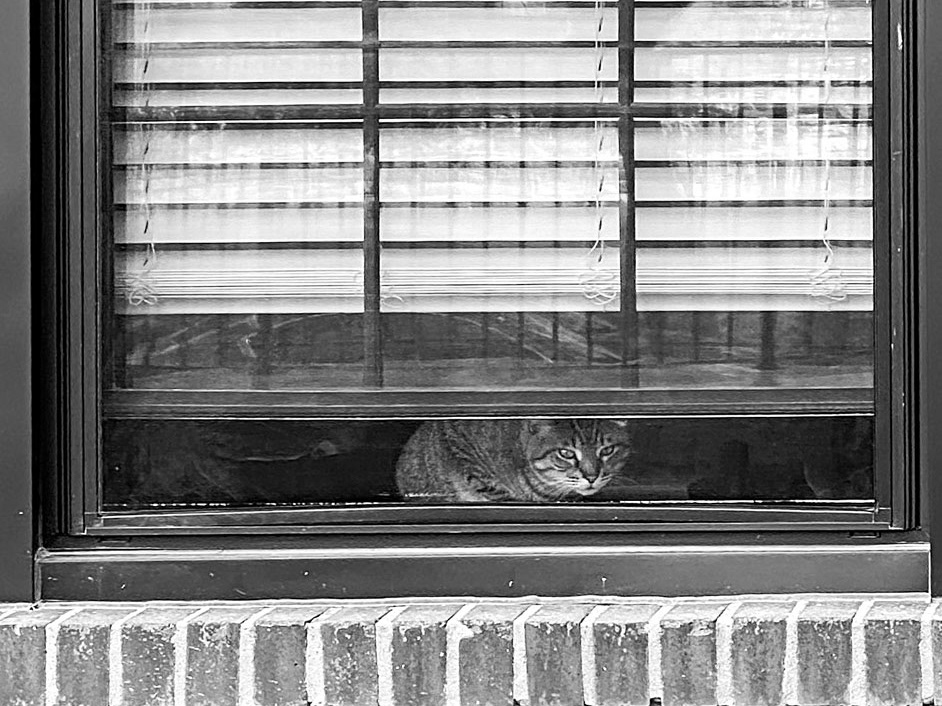
The challenge the series takes on is to sustain a body of work around a question rather than an answer. Photographing who lives in a house is easy—one need only knock on the door. Photographing someone’s existence without revealing the person requires all the information to come from the surface: the color the resident chose, the object left on the balcony, the gap opened so the cat can see the street. The façade becomes a portrait by proxy.
Ten façades assert that someone lives there.
None says who.
None says who.
THE METHOD
Two modes, and an editing process that lasts for years
The first feature of the method is the coexistence of two ways of working that usually exclude one another. There is the image made in seconds, under the pressure of traffic or a changing light, with the framing resolved before the hand even rises; and there is the prepared image, seen one night and made the next, or composed in advance down to the last line dividing the frame. The artist calls one instinctive and describes the other as super thought-out. Both belong to the same body of work, and the only difference between them is the time available.
The second feature is less visible and more decisive: four of these ten works were determined later, far from the street. One exists because of a crop that eliminated a gate and a taxi and transformed an urban scene into a portrait. Another was chosen over the more spectacular version of the same scene because the spectacular version lost the house. A third replaced an image the artist had already published. In a fourth, the criterion for selection was not technical: it was the attitude of a cat. Looking again, and changing one’s mind, is part of the work.
The third feature is a way of conducting herself. Photographing someone who realizes they are being photographed is something this artist finds difficult, and she has stated this without qualification. Hence her approach to people—one shot, no insistence, distance preserved. When a resident retreated into the darkness of her room upon seeing the lens, the photograph kept the retreat and did not follow.
The fourth feature is an openness. Twice, across these ten images, the device added something the eyes had not seen—a halo around a lamp in broad daylight; snow turned into streaks by a shutter that took its time closing. In both cases, the artist recognized that the result surpassed the intention, and made it her own.
She does not capture the instant.
She decides, often years later, which instant remains.
She decides, often years later, which instant remains.
THE LINEAGE
The traditions in which the series takes its place
The lineage of Who Lives Here is not ornamental: it is what gives these images context, reference, and the capacity to endure. Five traditions intersect here, and none is imitated—all are inhabited.
The figure in the opening. The motif of the woman at the window runs through the history of images since antiquity and finds one of its great landmarks in Rembrandt’s Girl at a Window; the figure leaning over a railing comes down through Goya’s Majas on a Balcony and Manet’s The Balcony; the cat on the windowsill has its celebrated counterpart in a print by Hiroshige. This is the tradition of the opening in a house occupied by someone looking out.
The façade as an inhabited body. Todd Hido photographed suburban houses at night, with no one in sight, illuminated only by the light already present in the scene; Andreas Gursky showed how an apparently lifeless surface comes alive once people and furniture can be discerned within it; Edward Hopper painted the solitary resident before a row of identical windows. This is the tradition of reading a building as a living creature.
Typology and the vernacular. Bernd and Hilla Becher demonstrated that similarities and differences become visible only when two examples of the same type are placed side by side; Luigi Ghirri made the color of an ordinary wall a subject in itself; Walker Evans devoted a lifetime to signs and street lettering; Paul Strand sought the traces of long habitation that give a place its particular character. This is the tradition of the detail that gives away the resident.
The light that was not there. René Magritte altered a single rule within a recognizable world by lighting a lamp beneath a daytime sky; Julia Margaret Cameron rejected the convention that a good photograph must be technically perfect; Alfred Stieglitz waited three hours in a snowstorm and made what is regarded as the first photograph of snow. This is the tradition in which the apparatus and chance are accepted as authors.
The surface between the eye and the house. The New Vision of the 1920s turned shadow into an autonomous form and used framing to make the familiar unfamiliar; Lee Friedlander made glass into a layer in which reflection and transparency overlap. This is the tradition of what comes between the one who looks and the one who is looked at—and in this series, whatever comes between them is never removed.
Beneath them all runs the same boundary:
the threshold, which the photographer does not cross.
the threshold, which the photographer does not cross.
THE TEN WORKS
Three movements
The works are numbered for cataloguing purposes, in the order in which they were documented. The reading of the series, however, is organized into three movements: the houses in which no one appears; those in which the resident appears in the opening; and the two in which the position is reversed and the one looking out is the one inside. What follows is not description: it is an assessment of what each work gets right and why it belongs here.
MOVEMENT I · THE HOUSE ALONE
MOVEMENT II · THE HOUSE AND ITS RESIDENT
MOVEMENT III · LOOKING FROM WITHIN
POSITIONING
Why this series matters
The question as subject. Almost every photograph of a person promises to reveal someone. This one promises the opposite, and delivers: it shows how far one can go in knowing another person by looking from the outside, and stops there. It is an unusual position in a market saturated with exposed intimacy, and it is what separates the series from a survey of picturesque façades.
The pairing with the previous series. Who Lives Here and What Remains form a precise diptych, and it is rare for an artist to arrive at a gallery with two complete, documented series that rhyme with each other so closely. One photographs what remains after life has passed through a place; the other, the life that is still inside and refuses to be seen. Absence and presence, both on the outside of the door. Together, they can sustain a solo exhibition whose narrative and lineage are already resolved.
What the collector takes home. Whoever acquires one of these works is not taking home a photograph of a beautiful house. They are taking home a question that continues to work on the wall—because no one will ever know who lives there—anchored in a lineage that runs through Rembrandt, Hiroshige, Hopper, and Gursky, and in a subject anyone can recognize: curiosity about other people’s lives, and the proper limit of that curiosity.
THE TEN TOGETHER
Half a century on the same sidewalk
Seen in sequence, the ten photographs form more than a group of strong images: they form an insistence. From 1978 to 2024, in four countries, with a film camera, with a phone, from a stopped car and on foot, the artist repeated the same gesture—to stop in front of someone else’s house and try to understand who was inside without ringing the bell. Each work stands on its own; together, the ten reveal that this was never merely a subject, but a habit spanning half a century.
And the series does not close the question. If all a house gives away is a chosen color, a forgotten object, a light switched on too early, then perhaps knowing someone is always this: reading signs from the outside and filling in the rest ourselves. Luiza stays on the sidewalk. She frames what the house was willing to show, and leaves before learning the rest.
Ten houses, a single gaze—and no one opens the door.
Curatorial and Strategic Consulting · Chirlei Bastos · Curatorial Direction