Série IV | Series IV
O vestígio — o que um lugar guarda depois que a vida passou por ele
The trace — what a place holds after life has passed through it
DOZE OBRAS · FOTOGRAFIA · ARQUIVO 1971–2026
A vida passa.
O vestígio fica.
A fotografia guarda.
A AUTORA
Cinquenta anos de um mesmo olhar
Luiza Whitaker é fotógrafa paulistana há mais de cinquenta anos. Formada em design e com duas décadas de trabalho como diretora de arte, chega à imagem com um olho treinado para o que a maioria das câmeras ignora: o enquadramento, o corte, a economia, a decisão do que deixar de fora. Não é uma fotógrafa que descobriu a composição — é uma que a pratica há meio século, e é essa disciplina, mais do que qualquer assunto, o que define o seu trabalho.
O seu método tem um nome que ela mesma deu: a foto mental. Quando não pode erguer a câmera, olha demoradamente a cena e faz “um clique na cabeça”, para guardar o que viu. É a definição mais exata do que ela é — alguém que compõe a imagem inteira antes de ela existir, e para quem fotografar é, antes de tudo, um exercício de pausa e de atenção. O arquivo que sustenta esta série vai de 1971 até hoje e atravessa vários países; a série reúne, dele, doze imagens feitas ao longo de quase toda uma vida.
A âncora da sua linhagem, reconhecida já no diagnóstico, é Michael Kenna — o mestre da paisagem atmosférica em preto e branco, que trabalha sem pressa, retorna ao mesmo lugar e espera que ele se abra, e cujas imagens quase nunca trazem uma figura humana. É um parentesco de posição, e ele diz muito sobre o que Luiza procura: não o acontecimento, mas a sua atmosfera; não a pessoa, mas o que ela deixa.
A SÉRIE
Uma presença feita só de ausências
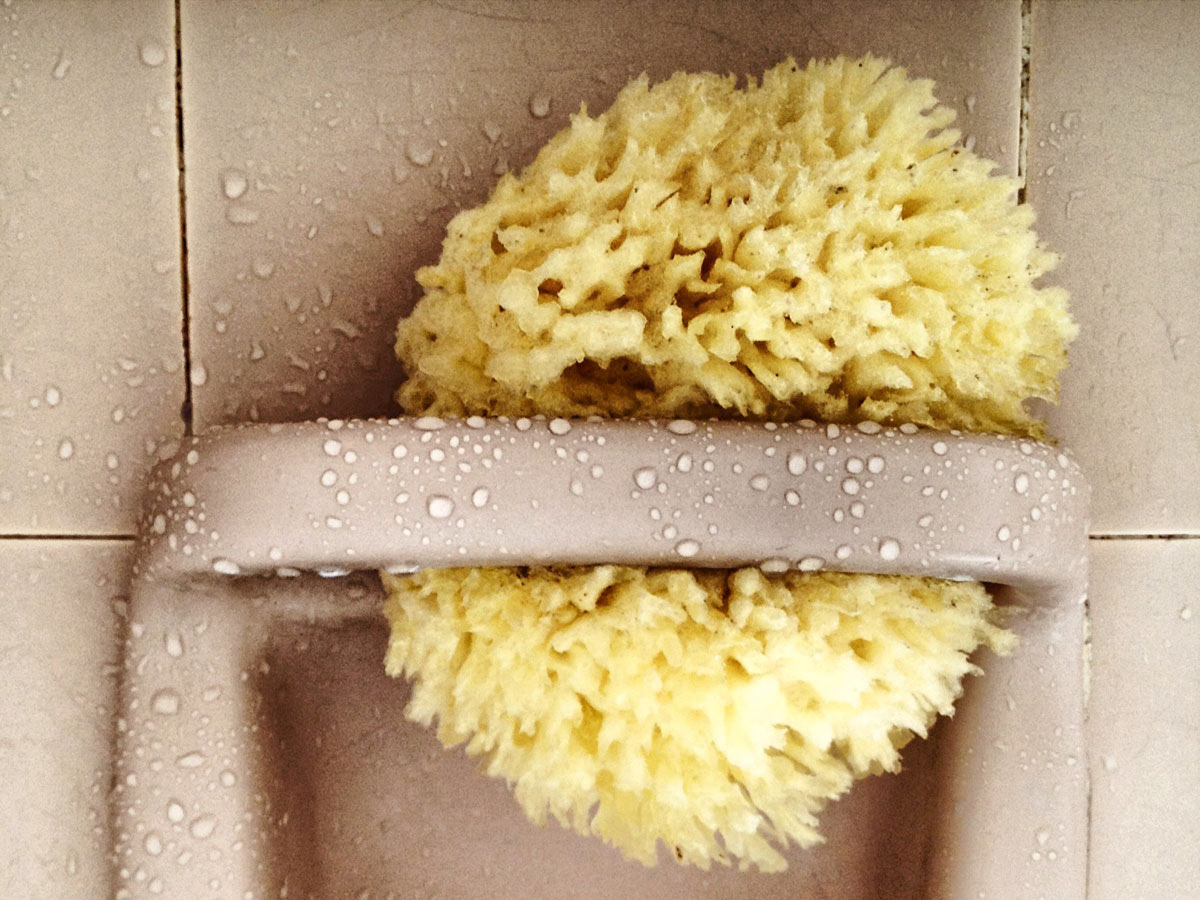
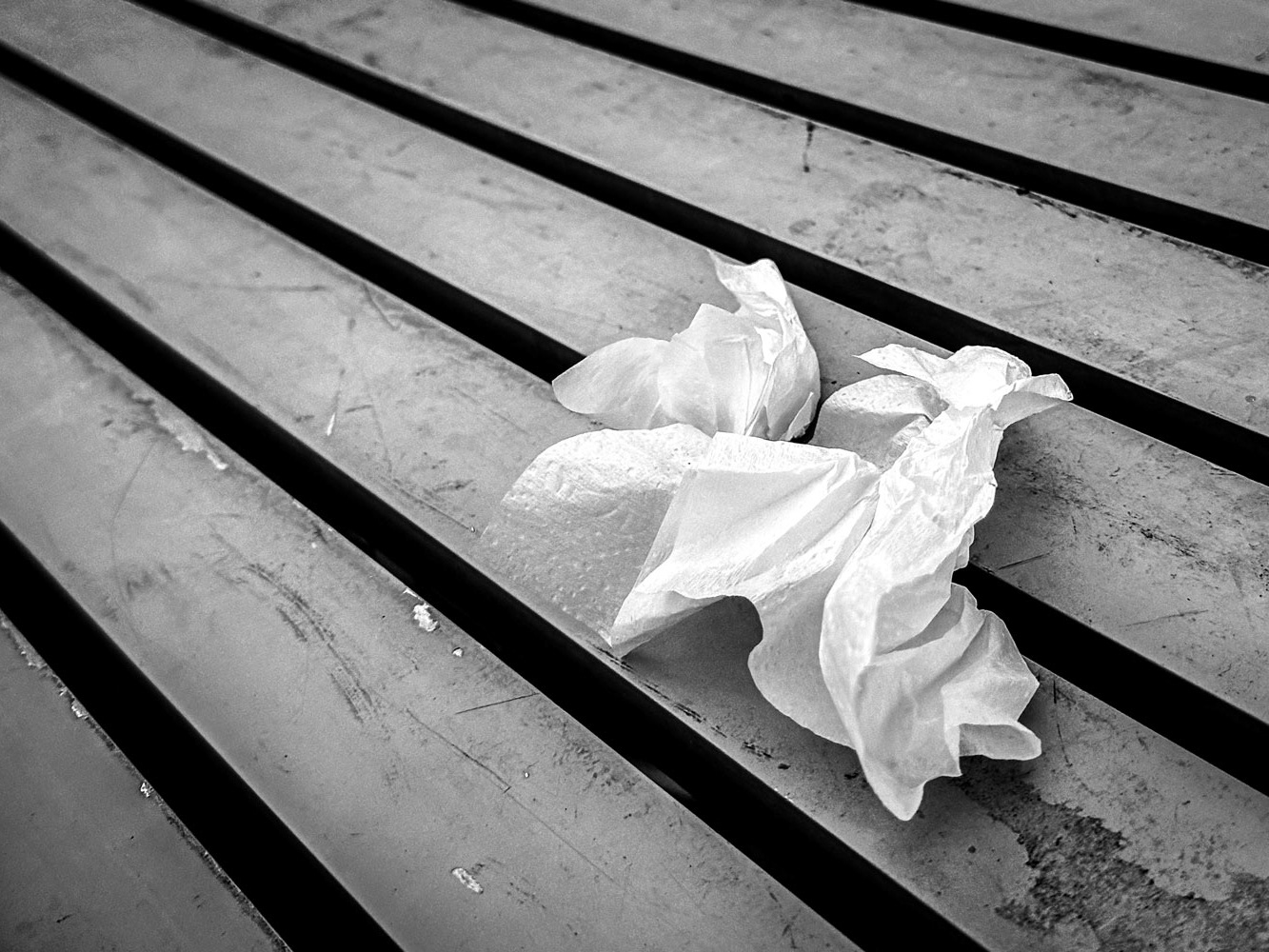
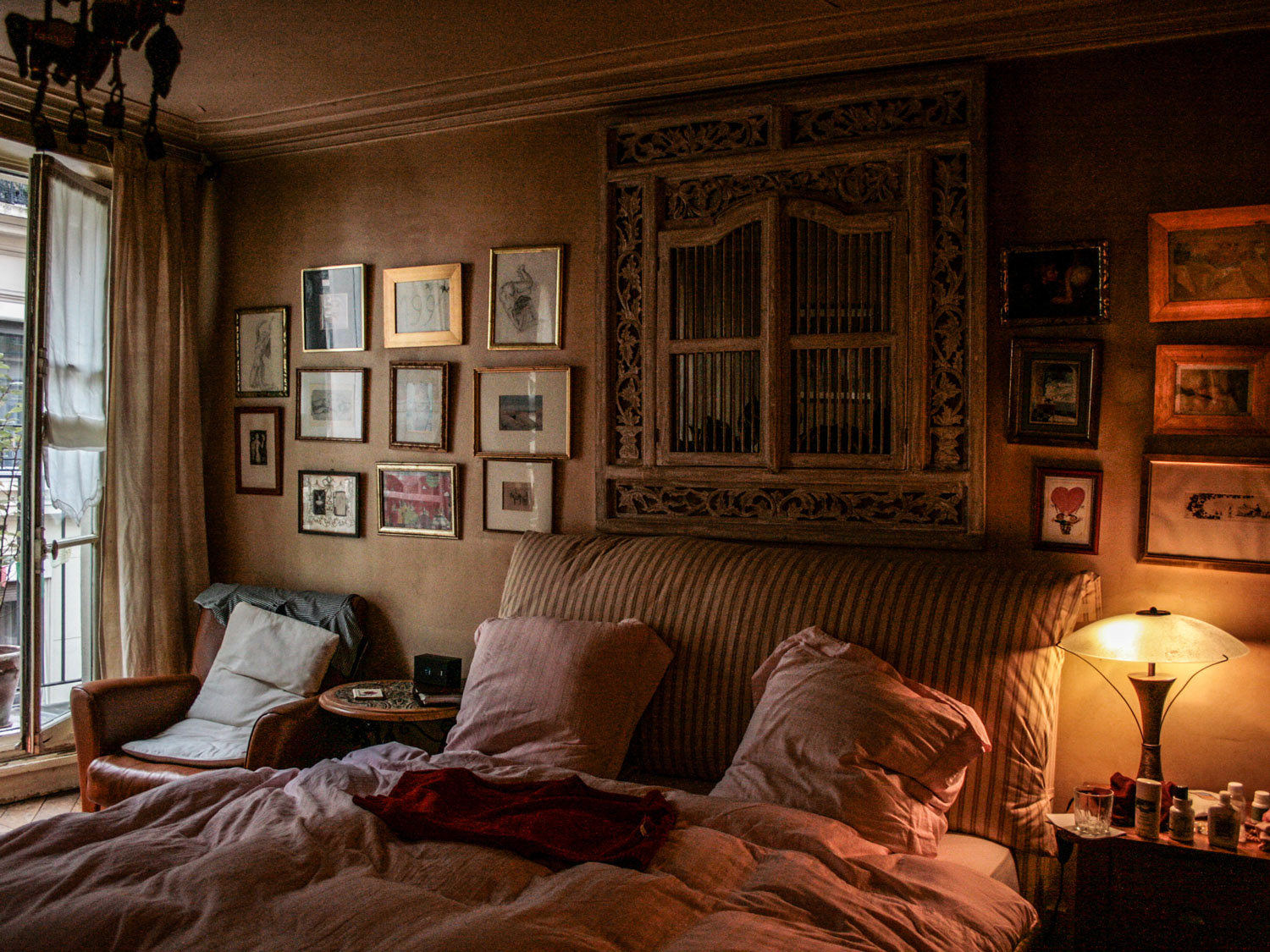
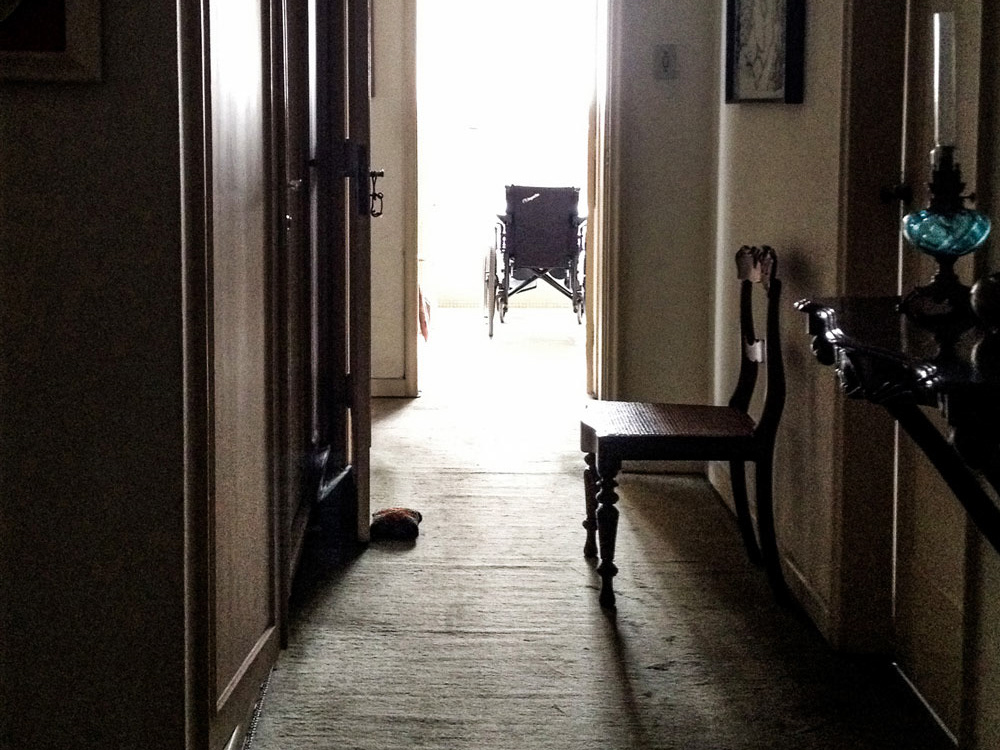
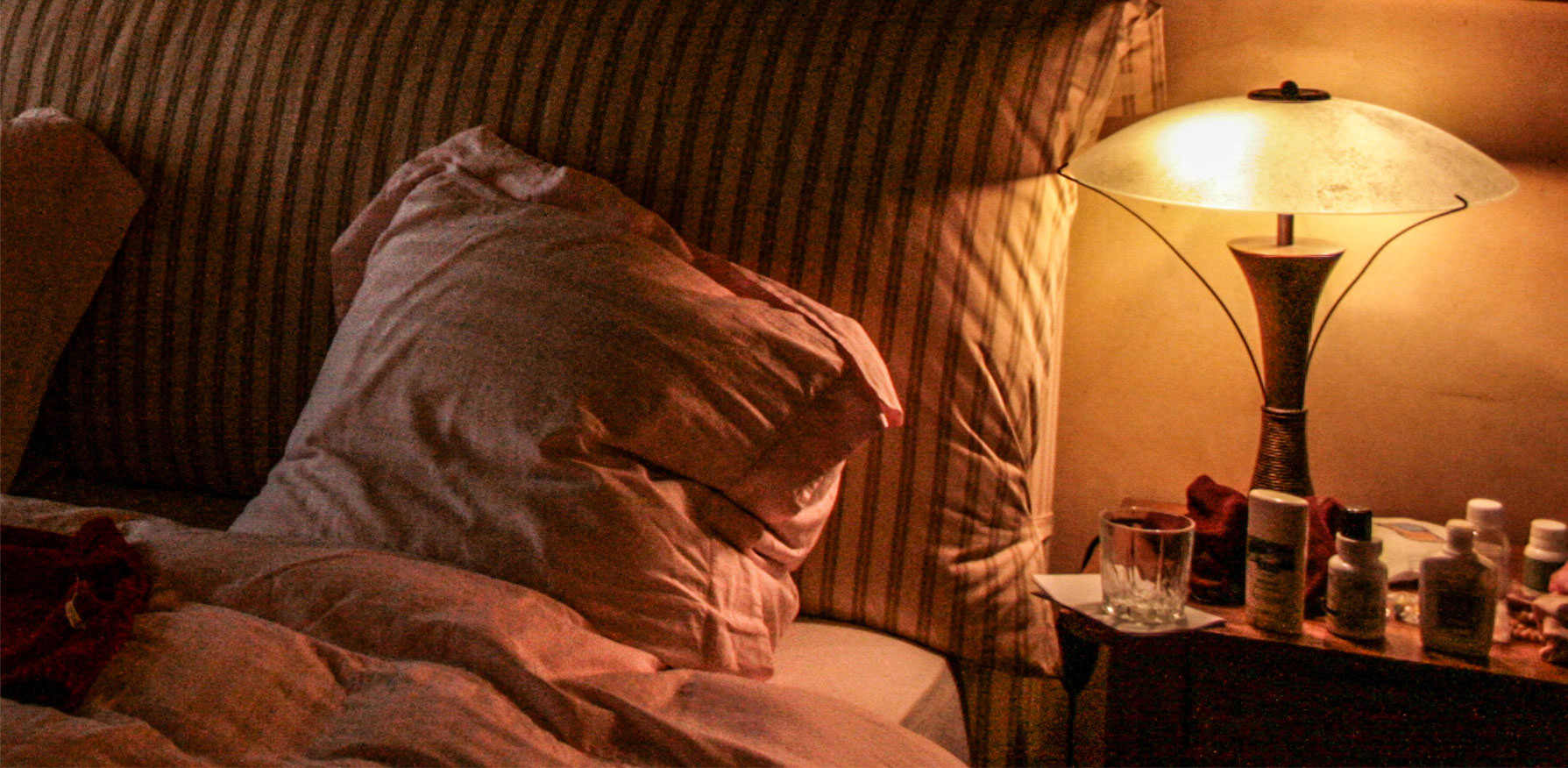
O Que Sobra é a série do vestígio: o que fica num lugar depois que a vida passou por ele. Em nenhuma das doze fotografias aparece uma figura humana — e, ainda assim, todas são o retrato de alguém. As gotas depois do banho, a cama recém-deixada, a feira desmontada, a cadeira vazia ao fim de um corredor: o corpo nunca está na imagem; o que está é a marca morna que ele deixou. É essa a ambição do conjunto, e é uma das mais difíceis que a fotografia permite — construir presença a partir do que restou.
A tese tem um fundamento que é da própria natureza do meio. Roland Barthes definiu a essência da fotografia como o “isto-foi” — o registro de algo que existiu diante da câmera e já não existe mais. Cada imagem de O Que Sobra leva isso ao pé da letra: não é só uma imagem de vestígios; é, ela própria, um vestígio — a prova fixa de um instante que não volta. A série descobre, no assunto, aquilo que a fotografia sempre foi.
Ninguém aparece.
E, ainda assim, tudo fala de alguém.
O MÉTODO
Compor antes de disparar
O que distingue estas imagens não é a sorte de quem estava no lugar certo — é a decisão de quem sabe o que procura e espera o tempo que for preciso. Luiza não dispara para depois escolher: escolhe antes de disparar. Em obra após obra, o gesto se repete — a espera pela luz que se abre, o retorno ao mesmo lugar, o corte que elimina tudo o que disputa a atenção. “Fica muita coisa acontecendo, não fica boa a foto”, ensinou-lhe um professor; a subtração virou assinatura.
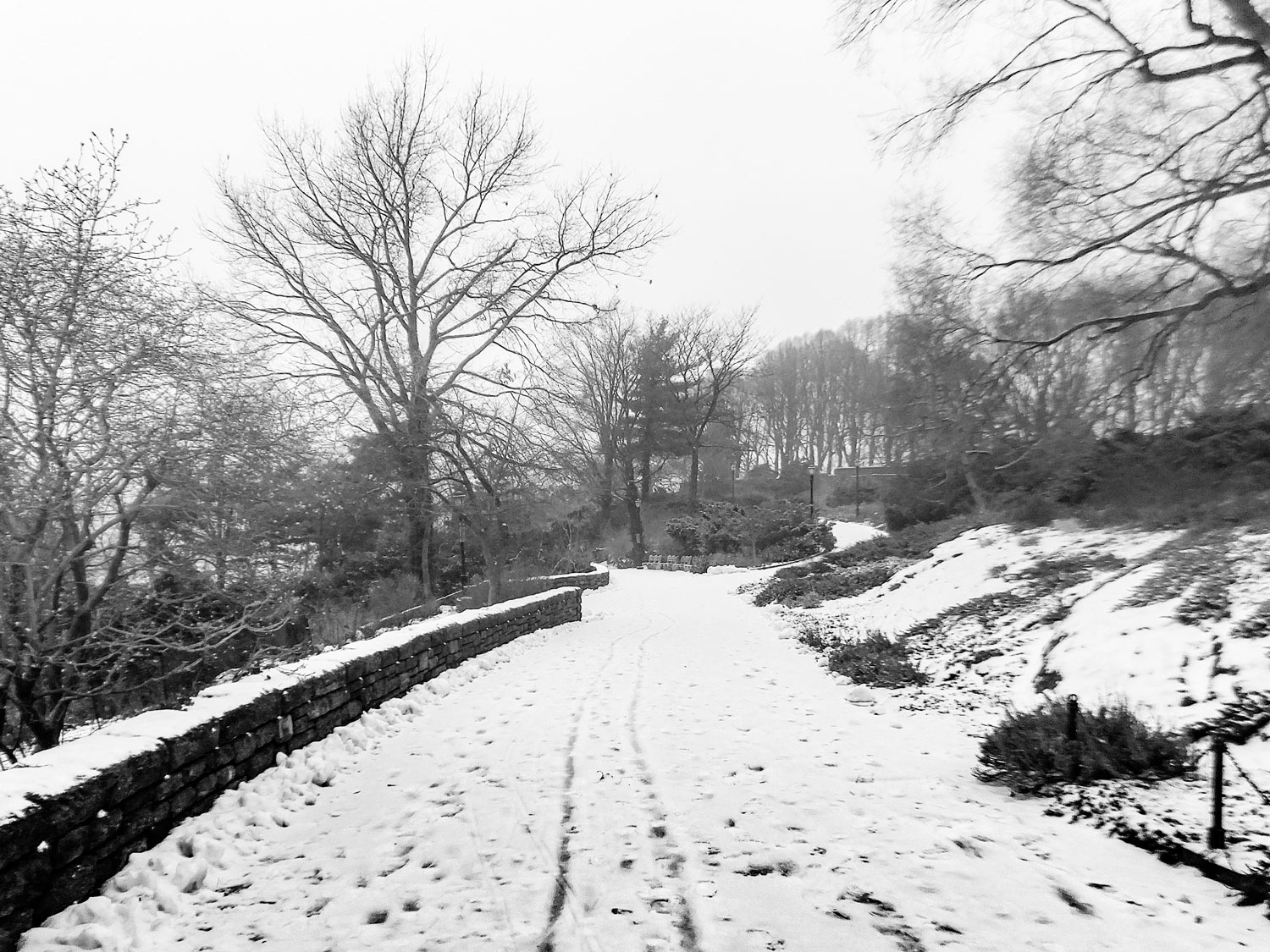
E há um segundo tempo do método, mais raro: o da descoberta posterior. Muitas destas obras revelaram, na revisão, o que a artista não vira no disparo — a nuance de uma montanha que parecia massa escura, a luz desenhada dentro de uma sombra, os rastros de um outro tempo sob a neve. É o que prova que a imagem foi bem composta: ela guarda mais do que o olho conscientemente pôs ali. Luiza é autora dessas fotografias no sentido pleno — não as capturou, construiu-as.
Ela não flagra o instante.
Ela compõe o que sobra dele.
A LINHAGEM
As famílias em que a série se inscreve
A linhagem de O Que Sobra é o seu lastro, não um enfeite. Ela não é semelhança de estilo — é parentesco de posição: a família de tradições com quem cada imagem conversa, e que dá ao conjunto contexto, legitimidade e a capacidade de durar. Cinco famílias se cruzam na série.
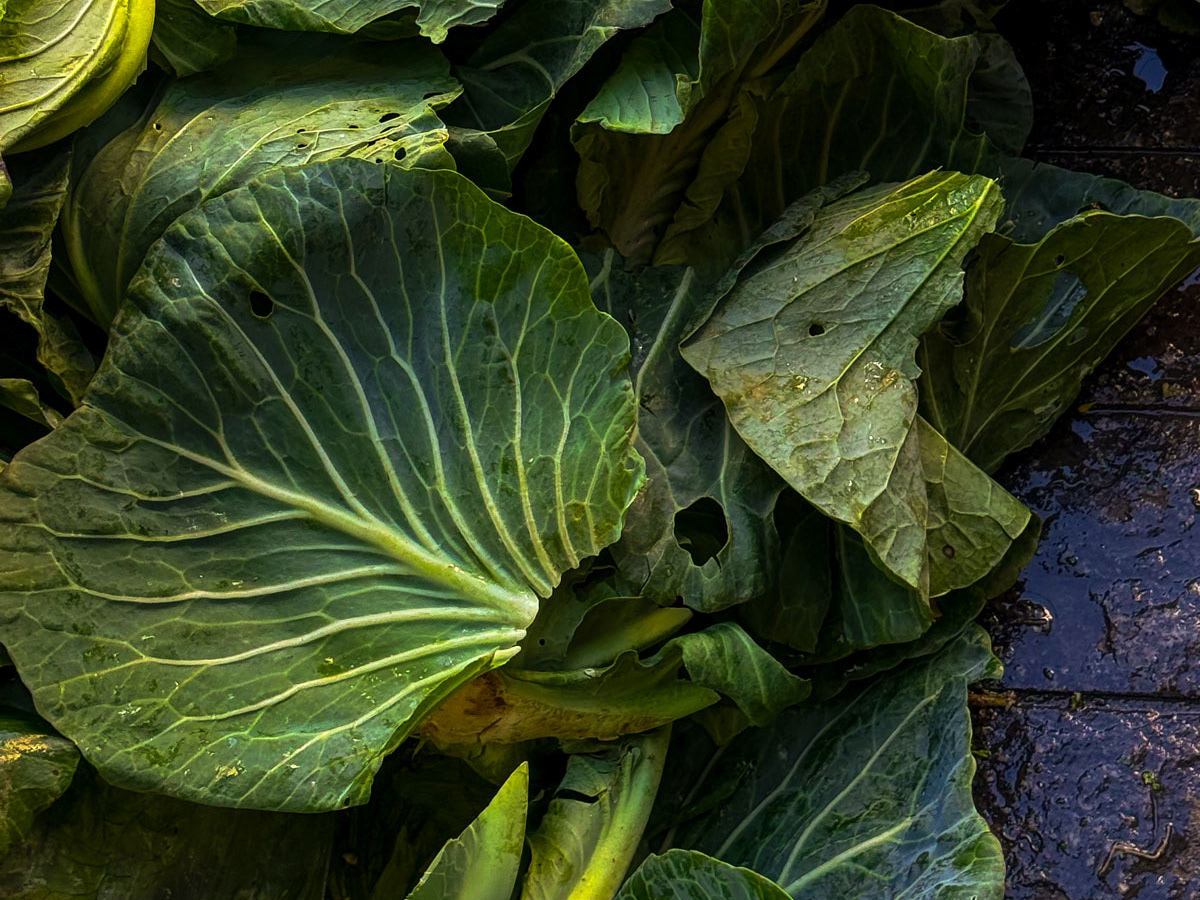
A natureza-morta e o objeto comum. Da pintura holandesa do século XVII — Pieter Claesz, Willem Heda —, que erguia o resto de uma refeição à condição de obra, a Edward Weston, que fotografou uma folha de repolho como escultura, à natureza-morta de mercado flamenga e ao objeto encontrado de Aaron Siskind e Irving Penn: a tradição que olha o mais humilde e o transforma em forma pela atenção de quem soube parar diante dele.
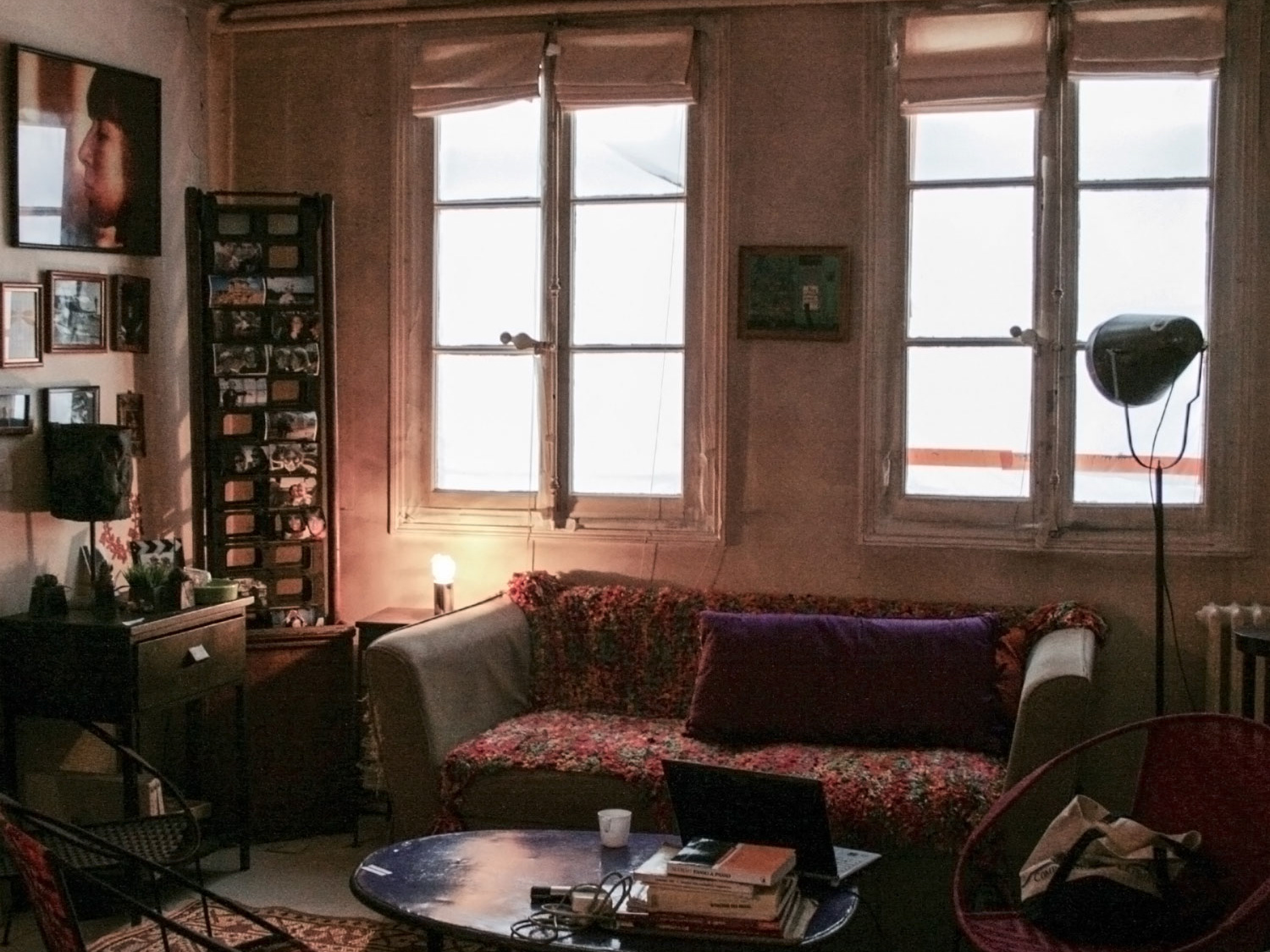
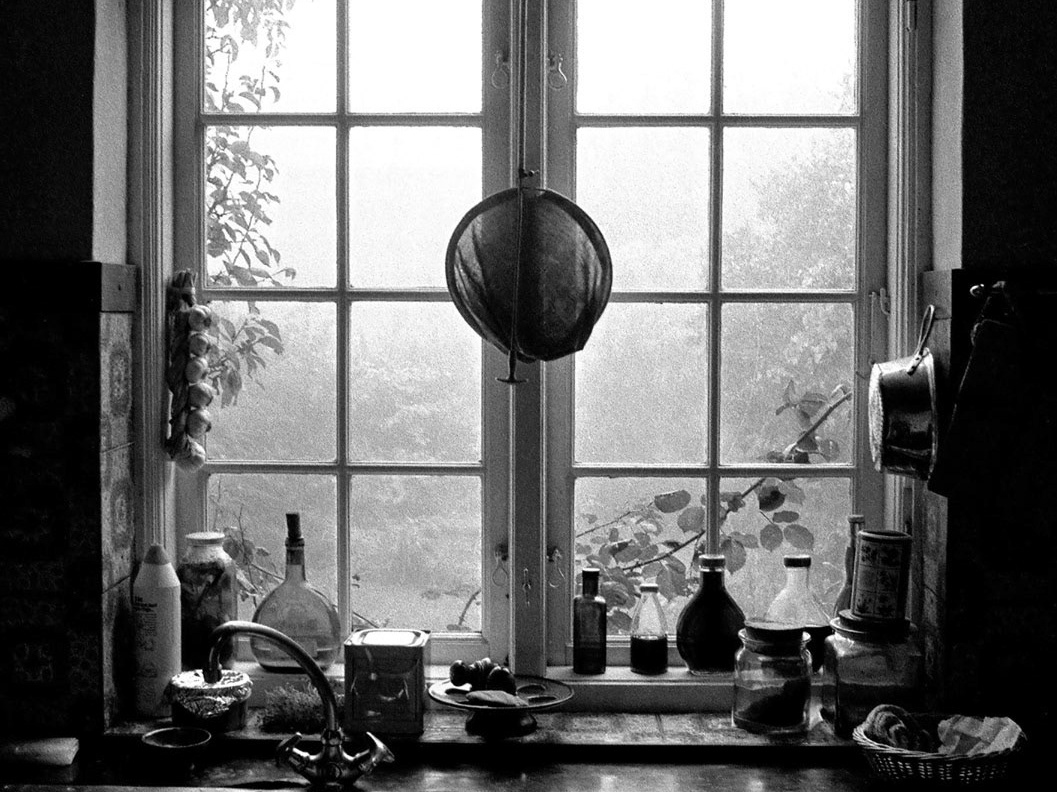
O interior e o intimismo. De Vermeer a Vilhelm Hammershøi, o pintor dinamarquês da janela como coração de um espaço habitado; e de Pierre Bonnard a Édouard Vuillard, para quem a mesa do café e o cômodo iluminado eram um diário pintado. É a família da casa vivida, da luz que entra e define o silêncio.
O quarto recém-deixado e a cor. A cama vazia de Delacroix e de Nan Goldin, feita toda de dobras e de ausência; o vermelho total de Matisse, que banha um cômodo inteiro como se o artista tivesse acabado de sair da sala. É a família do espaço no instante seguinte à saída de quem o habitava.
A paisagem e o tempo. Michael Kenna e a bruma que mede o efêmero contra o permanente; Hiroshi Sugimoto e o mar como “fossilização do tempo”; a perspectiva atmosférica do sumi-e, em que o mundo recua em planos até o vazio; e Eugène Atget, que fixou as estátuas e os cantos de Paris condenados a desaparecer. É a família do vestígio que o próprio mundo está prestes a apagar.
E, no fim de tudo, a cadeira vazia de Van Gogh — o objeto comum que, desocupado, vira o retrato de quem não está. É a linhagem mais comovente da série, e a que ela guarda para a última imagem. Sob todas elas corre o mesmo fio de Barthes: a fotografia como o que resta.
Não é semelhança de estilo. É parentesco de posição.
AS DOZE OBRAS
O arco do vestígio, do doméstico à despedida
As doze imagens traçam um movimento que vai de fora para dentro. Abrem no vestígio doméstico — o banho, a mesa, a janela, a cozinha —, passam pela habitação de passagem e pelo que a cidade descarta, alcançam o rastro que a paisagem está a ponto de apagar e chegam, enfim, ao vestígio mais fundo de todos: o que resta quando resta apenas a saudade. Cada obra se sustenta sozinha; as doze, juntas, sustentam uma tese. O que segue não descreve as imagens — avalia o que cada uma acerta, e por que pertence ao conjunto.
POSICIONAMENTO
Por que esta série importa
A dupla pertença. O Que Sobra pertence, ao mesmo tempo, à história da fotografia — uma linhagem séria, de Weston a Kenna, de Hammershøi a Sudek — e a uma conversa urgente e universal sobre memória, tempo e perda. Não é só exercício de forma, nem só comentário sentimental: é as duas coisas na mesma superfície. Essa dupla pertença é a sua posição no mercado, e é rara.
A maturidade do conjunto. Doze imagens feitas ao longo de quase meio século, em países e décadas diferentes, que ainda assim se leem como capítulos de um mesmo texto. Essa coerência não se improvisa — revela um trabalho que já sabia o que era muito antes de ser nomeado. A série não inventou o olhar da Luiza; deu forma ao que ele fazia desde sempre.
O que o colecionador leva. Quem adquire uma destas obras não leva uma imagem bonita de um objeto comum. Leva uma proposição sobre para que serve uma fotografia, ancorada numa linhagem que sustenta a conversa e num assunto que toca qualquer um. É uma obra que pertence, ao mesmo tempo, à parede e à memória de quem a vê — e é essa dupla permanência que a faz durar.
AS DOZE JUNTAS
Uma odisseia do que permanece
Vistas em sequência, as doze fotografias formam mais do que um conjunto de imagens fortes: formam um só olhar, insistindo em uma única coisa — que o que passa despercebido merece permanecer. Da gota que não se repete à cadeira que se dissolve na luz, a série recolhe os vestígios de uma vida inteira de atenção e os fixa antes que o tempo os leve. Cada obra se basta; as doze, juntas, dizem o que nenhuma diria sozinha.
E, no fim, a série não fecha a pergunta — deixa-a de pé. Se tudo o que a vida toca acaba virando vestígio, então talvez fotografar não seja reter o instante, mas aprender a ver o que ele deixa para trás. Luiza não conclui. Detém o olhar sobre o que sobra, com a paciência de cinquenta anos, e entrega a quem olha a parte que falta: lembrar de quem passou por ali.
Doze vestígios, um só olhar — e a pergunta de pé.
Consultoria Curatorial e Estratégica · Chirlei Bastos · Direção Curatorial
m
TWELVE WORKS · PHOTOGRAPHY · ARCHIVE 1971–2026
Life passes.
The trace remains.
Photography preserves.
THE ARTIST
Fifty years of the same way of seeing
Luiza Whitaker is a São Paulo–based photographer who has been making photographs for more than fifty years. Trained in design, with two decades of experience as an art director, she approaches the image with an eye trained to see what most cameras overlook: framing, cropping, economy, the decision of what to leave out. She is not a photographer who discovered composition — she is one who has practiced it for half a century, and it is this discipline, more than any particular subject, that defines her work.
Her method has a name she coined herself: the mental photograph. When she cannot raise the camera, she looks at the scene for a long time and takes “a click in her head,” to preserve what she has seen. It is perhaps the most precise definition of who she is — someone who composes the entire image before it exists, and for whom photography is, above all, an exercise in pausing and paying attention. The archive behind this series stretches from 1971 to the present and across several countries; from it, the series brings together twelve images made over the course of nearly an entire lifetime.
The anchor of her photographic lineage, already identified in the initial assessment, is Michael Kenna — the master of atmospheric black-and-white landscape photography, who works without haste, returns to the same place and waits for it to reveal itself, and whose images almost never include a human figure. It is a kinship of approach, and it says much about what Luiza seeks: not the event, but its atmosphere; not the person, but what they leave behind.
THE SERIES
A presence made entirely of absence
What Is Left is a series about traces: what remains in a place after life has passed through it. Not one of the twelve photographs contains a human figure — and yet every one is a portrait of someone. The drops after a shower, the bed just vacated, the market after closing, the empty chair at the end of a corridor: the body is never in the image; what is there is the lingering warmth of the mark it left behind. This is the ambition of the series, and one of the most difficult things photography can attempt — to construct presence out of what is left.
The premise is rooted in the very nature of the medium. Roland Barthes defined the essence of photography as the “that-has-been” — the record of something that existed before the camera and is no longer there. Each image in What Is Lefttakes this literally: it is not merely an image of traces; it is itself a trace — the fixed evidence of an instant that will not return. In its subject, the series discovers what photography has always been.
No one appears.
And yet everything speaks of someone.
And yet everything speaks of someone.
THE METHOD
Composing before pressing the shutter
What distinguishes these images is not the luck of being in the right place — it is the deliberateness of someone who knows what she is looking for and waits as long as necessary. Luiza does not shoot first and choose later: she chooses before she shoots. From one work to the next, the same gesture recurs — waiting for the light to break through, returning to the same place, cropping away everything that competes for attention. “When there’s too much going on, the photograph doesn’t work,” a teacher once told her; subtraction became a signature.
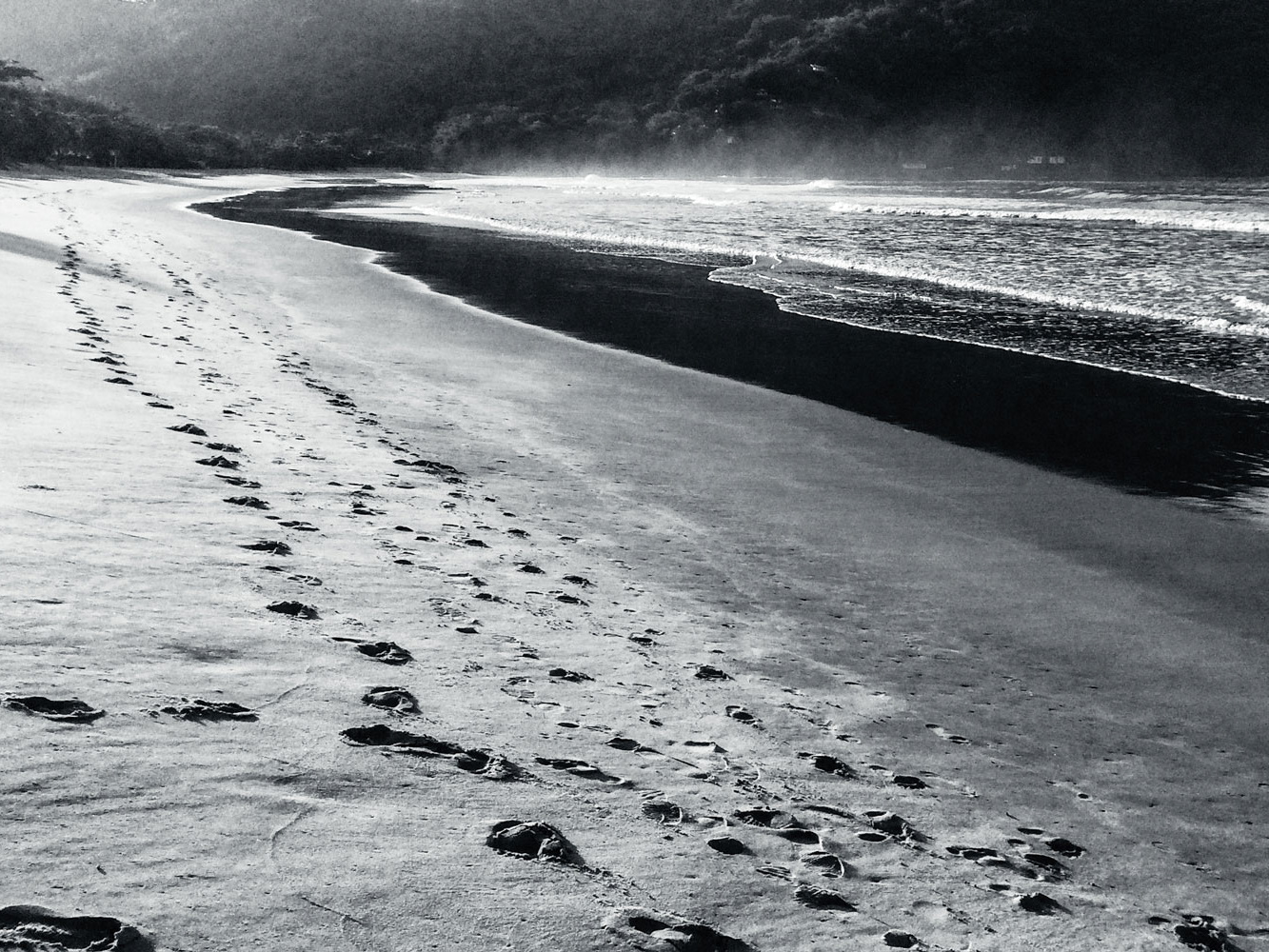
And there is a second stage to the method, a rarer one: discovery after the fact. Many of these works revealed, on later review, things the artist had not seen when she pressed the shutter — the nuance of a mountain that had seemed a dark mass, light drawn within a shadow, traces of another time beneath the snow. This is what proves that an image has been well composed: it holds more than the eye consciously placed there. Luiza is the author of these photographs in the fullest sense — she did not capture them; she constructed them.
She does not catch the fleeting moment.
She composes what is left of it.
She composes what is left of it.
THE LINEAGE
The traditions to which the series belongs
The lineage of What Is Left is its foundation, not an embellishment. It is not a matter of stylistic resemblance — it is a kinship of approach: the family of traditions with which each image enters into dialogue, giving the series context, legitimacy, and the capacity to endure. Five traditions intersect within the series.
Still life and the everyday object. From seventeenth-century Dutch painting — Pieter Claesz, Willem Heda — which elevated the remains of a meal to the status of art, to Edward Weston, who photographed a cabbage leaf as sculpture; from the Flemish market still life to the found objects of Aaron Siskind and Irving Penn: the tradition that looks at the humblest things and transforms them into form through the attention of someone who knew to stop and look.
The interior and Intimism. From Vermeer to Vilhelm Hammershøi, the Danish painter for whom the window was the heart of an inhabited space; and from Pierre Bonnard to Édouard Vuillard, for whom the breakfast table and the illuminated room became a painted diary. This is the tradition of the lived-in home, of light entering and defining the silence.
The just-vacated room and color. The empty bed of Delacroix and Nan Goldin, made entirely of folds and absence; Matisse’s all-encompassing red, bathing an entire room as though the artist had only just stepped out. This is the tradition of space in the moment immediately after the person who inhabited it has left.
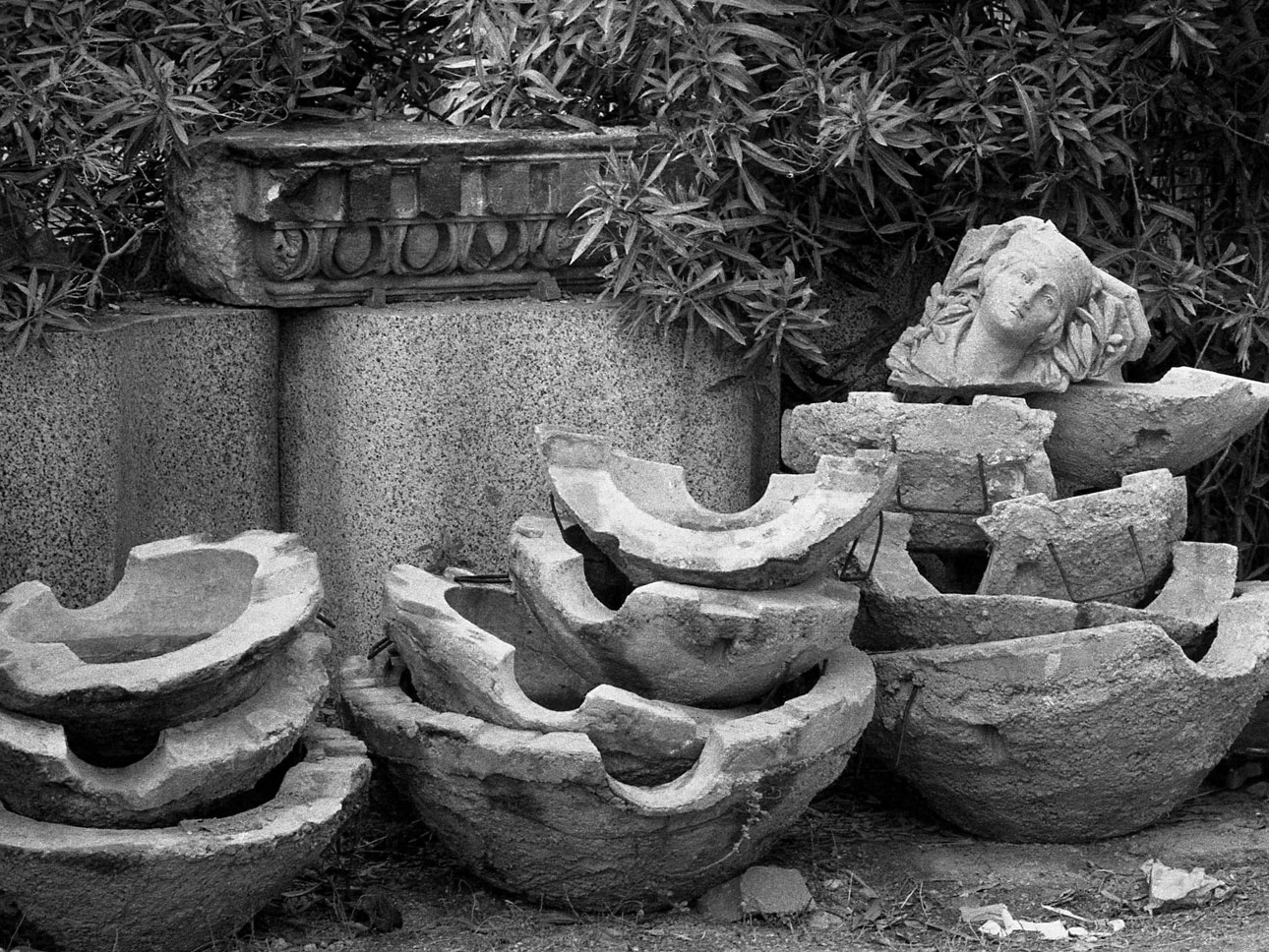
Landscape and time. Michael Kenna and the mist that measures the ephemeral against the permanent; Hiroshi Sugimoto and the sea as a “fossilization of time”; the atmospheric perspective of sumi-e, in which the world recedes through successive planes into emptiness; and Eugène Atget, who preserved the statues and corners of Paris destined to disappear. This is the tradition of the trace that the world itself is about to erase.
And, at the end of it all, Van Gogh’s empty chair — the everyday object that, once unoccupied, becomes a portrait of the person who is not there. It is the most moving lineage in the series, and the one reserved for its final image. Running through them all is the same thread of Barthes: photography as what is left.
It is not stylistic resemblance. It is a kinship of approach.
THE TWELVE WORKS
The arc of the trace, from the domestic to farewell
The twelve images trace a movement from the outside in. They begin with the domestic trace — the shower, the table, the window, the kitchen — move through temporary dwellings and what the city discards, reach the traces the landscape is about to erase, and arrive, finally, at the deepest trace of all: what is left when only longing remains. Each work stands on its own; together, the twelve sustain a thesis. What follows does not describe the images — it considers what each one achieves, and why it belongs in the series.
POSITIONING
Why this series matters
A dual belonging. What Is Left belongs simultaneously to the history of photography — to a serious lineage, from Weston to Kenna, from Hammershøi to Sudek — and to an urgent, universal conversation about memory, time, and loss. It is neither merely an exercise in form nor merely a sentimental reflection: it is both on the same surface. This dual belonging defines its position in the market, and it is rare.
The maturity of the body of work. Twelve images made over nearly half a century, in different countries and different decades, yet they read as chapters of the same text. Such coherence cannot be improvised — it reveals a body of work that knew what it was long before it was given a name. The series did not invent Luiza’s way of seeing; it gave form to what her eye had been doing all along.
What the collector takes with them. To acquire one of these works is not simply to acquire a beautiful image of an ordinary object. It is to acquire a proposition about what photography is for, grounded in a lineage that sustains the conversation and in a subject that touches everyone. It is a work that belongs both on the wall and in the memory of the person who sees it — and it is this dual permanence that gives it staying power.
THE TWELVE TOGETHER
An odyssey of what endures
Seen in sequence, the twelve photographs form more than a collection of strong images: they form a single way of seeing, insisting on one thing — that what goes unnoticed deserves to endure. From the drop that will never recur to the chair dissolving into light, the series gathers the traces of a lifetime of attention and fixes them before time carries them away. Each work is complete in itself; together, the twelve say what none could say alone.
And in the end, the series does not close the question — it leaves it standing. If everything life touches eventually becomes a trace, then perhaps photography is not about holding on to the instant, but about learning to see what it leaves behind. Luiza offers no conclusion. She holds her gaze on what is left, with the patience of fifty years, and gives the viewer the missing part: to remember who passed through.
Twelve traces, a single way of seeing — and the question left standing.
Curatorial and Strategic Consulting · Chirlei Bastos · Curatorial Direction