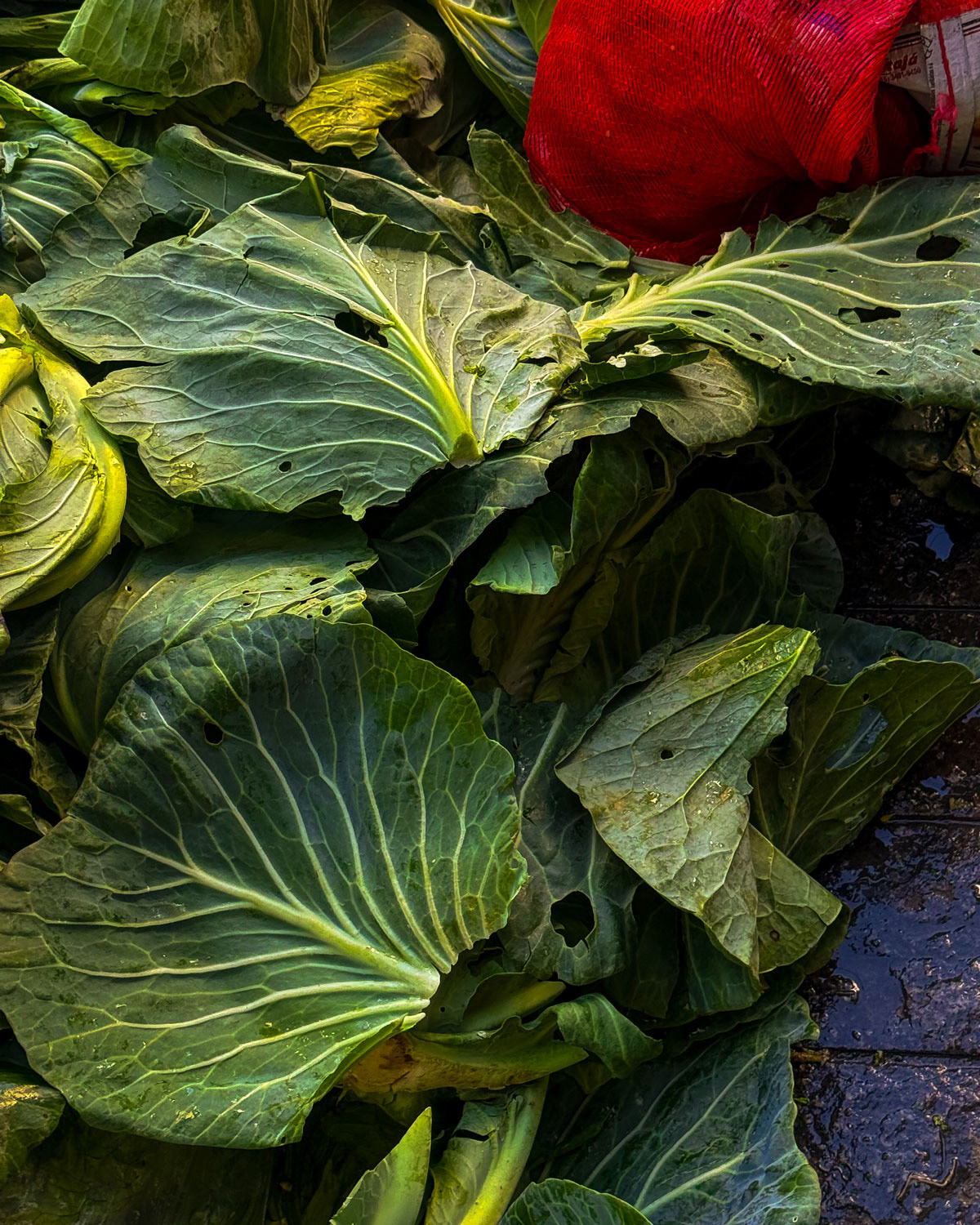
A virada ética da série, e a obra em que a cor é o argumento: o verde das folhas e o vermelho da rede, complementares, sustentam o quadro. A força é a dupla leitura que Luiza montou sem enunciá-la — o desperdício do mercado e a beleza que ninguém repara, jogados no mesmo monte. Onde a pintura flamenga celebrava a fartura das bancas, ela fotografa a fartura depois, quando virou descarte. Essa inversão é crítica feita por meio da forma.
“Pode existir beleza até no lixo. A gente desperdiça coisas que são bonitas, e não nota que elas são bonitas.”
Edward Weston · a natureza-morta de mercado flamenga → Luiza Whitaker
m
The ethical turn of the series, and the work in which color makes the argument: the green of the leaves and the red of the netting, complementary colors, hold the composition together. Its strength lies in the double reading Luiza constructed without stating it outright — the market’s waste and the beauty no one notices, thrown onto the same pile. Where Flemish painting celebrated the abundance of market stalls, she photographs abundance afterward, once it has become waste. The inversion turns form itself into critique.
“There can be beauty even in garbage. We throw away things that are beautiful without even noticing their beauty.”
Edward Weston · Flemish market still life → Luiza Whitaker