A Hora azul | The Blue Hour
Série | Series II
O intervalo em que as duas luzes coexistem | The interval in which the two lights coexist
DOZE OBRAS · FOTOGRAFIA · BRASIL E ESTADOS UNIDOS
O dia acaba em cima.
A cidade acende embaixo.
A fotografia fica com as duas.
A cidade acende embaixo.
A fotografia fica com as duas.
A AUTORA
Cinquenta anos atrás de uma cor
Meio século de fotografia e, antes disso, uma formação em design seguida de vinte anos de direção de arte: é dessa origem que vem o traço mais visível deste conjunto — um olho educado para a proporção, que decide em quase todas as imagens onde cai a lua dentro do retângulo e a que altura fica a linha do horizonte.
O seu trabalho é majoritariamente em preto e branco, e a artista reserva uma categoria à parte para as poucas fotografias em que a cor responde por tudo. Este conjunto é feito inteiro dessa categoria. Não é, portanto, um recorte qualquer do arquivo: é a reunião das imagens em que ela abriu mão do seu terreno mais habitual.
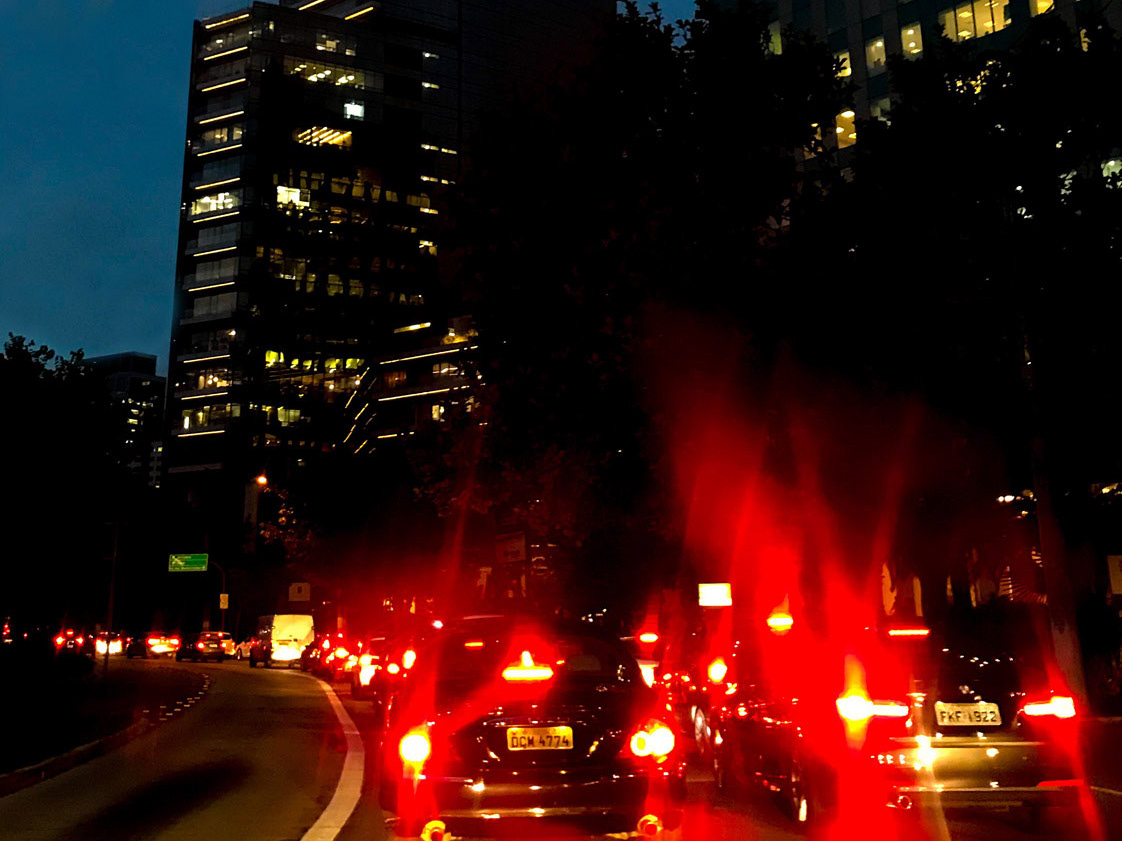
As ferramentas variam sem que o olhar mude. Existe aqui uma imagem feita com câmera profissional e definição integral, outras feitas com telefone comum, uma feita através do para-brisa de um carro parado no trânsito. O que se repete não é o equipamento nem o país: é a hora do dia.
A SÉRIE
Um intervalo de minutos
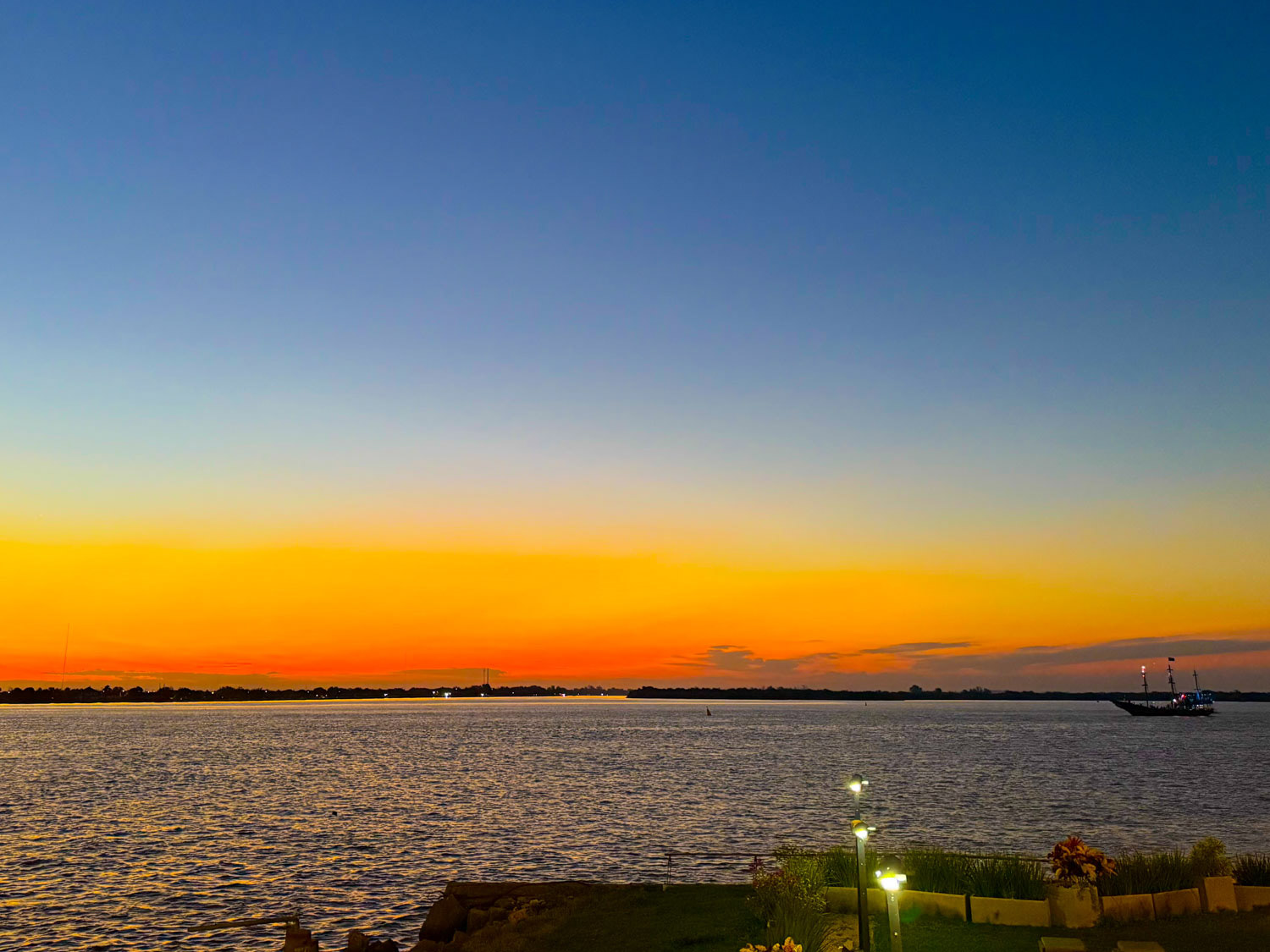
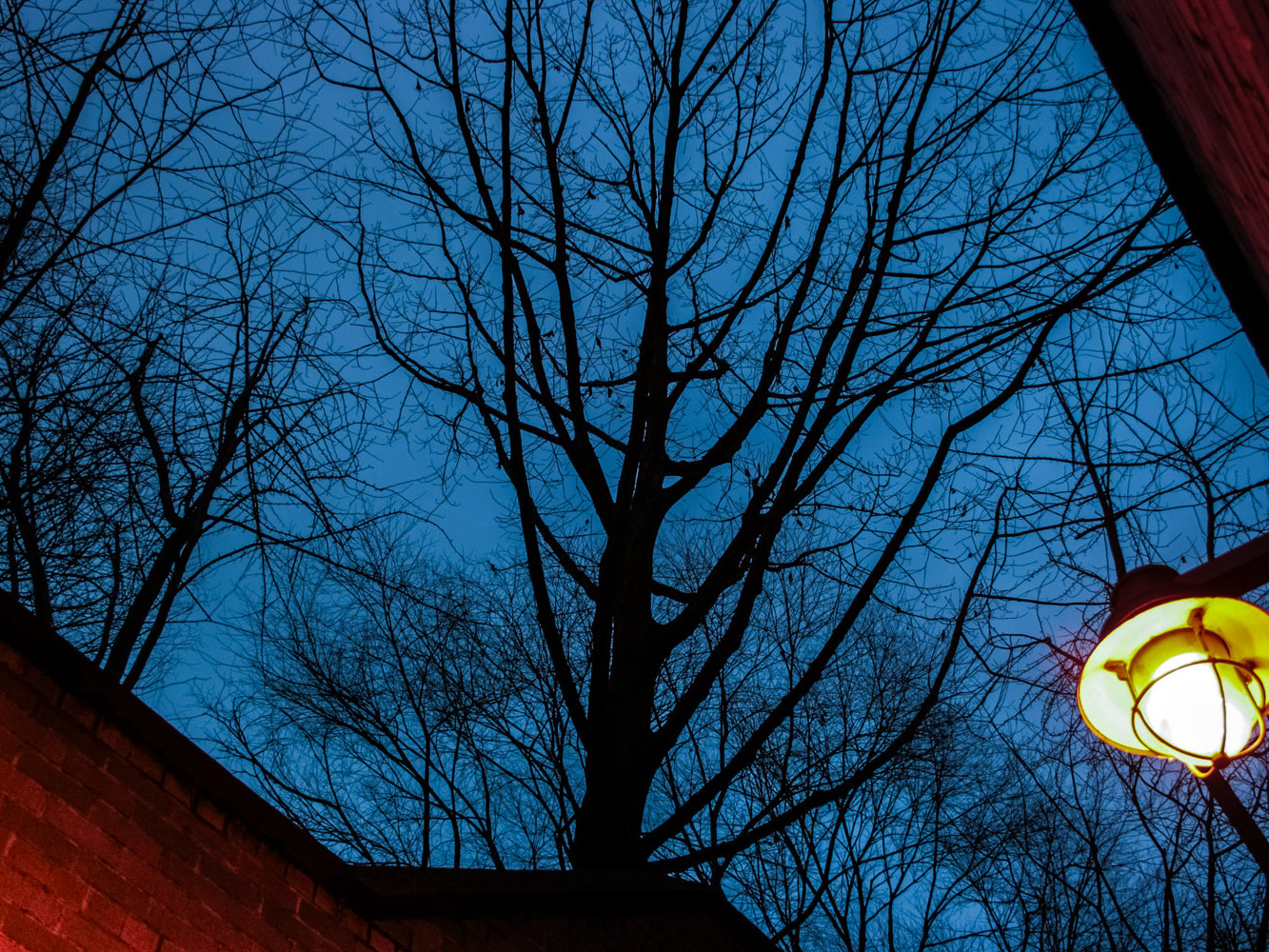
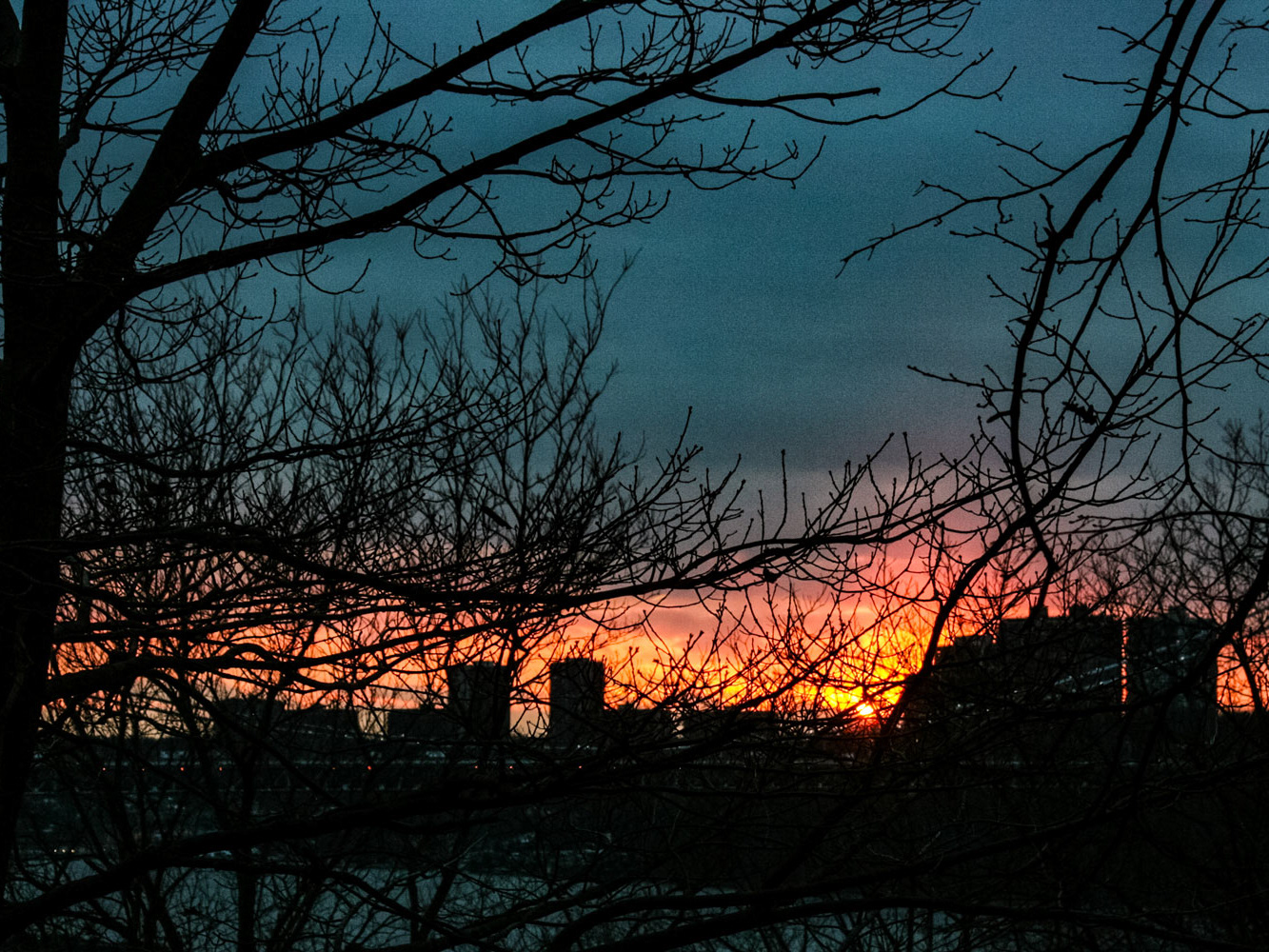
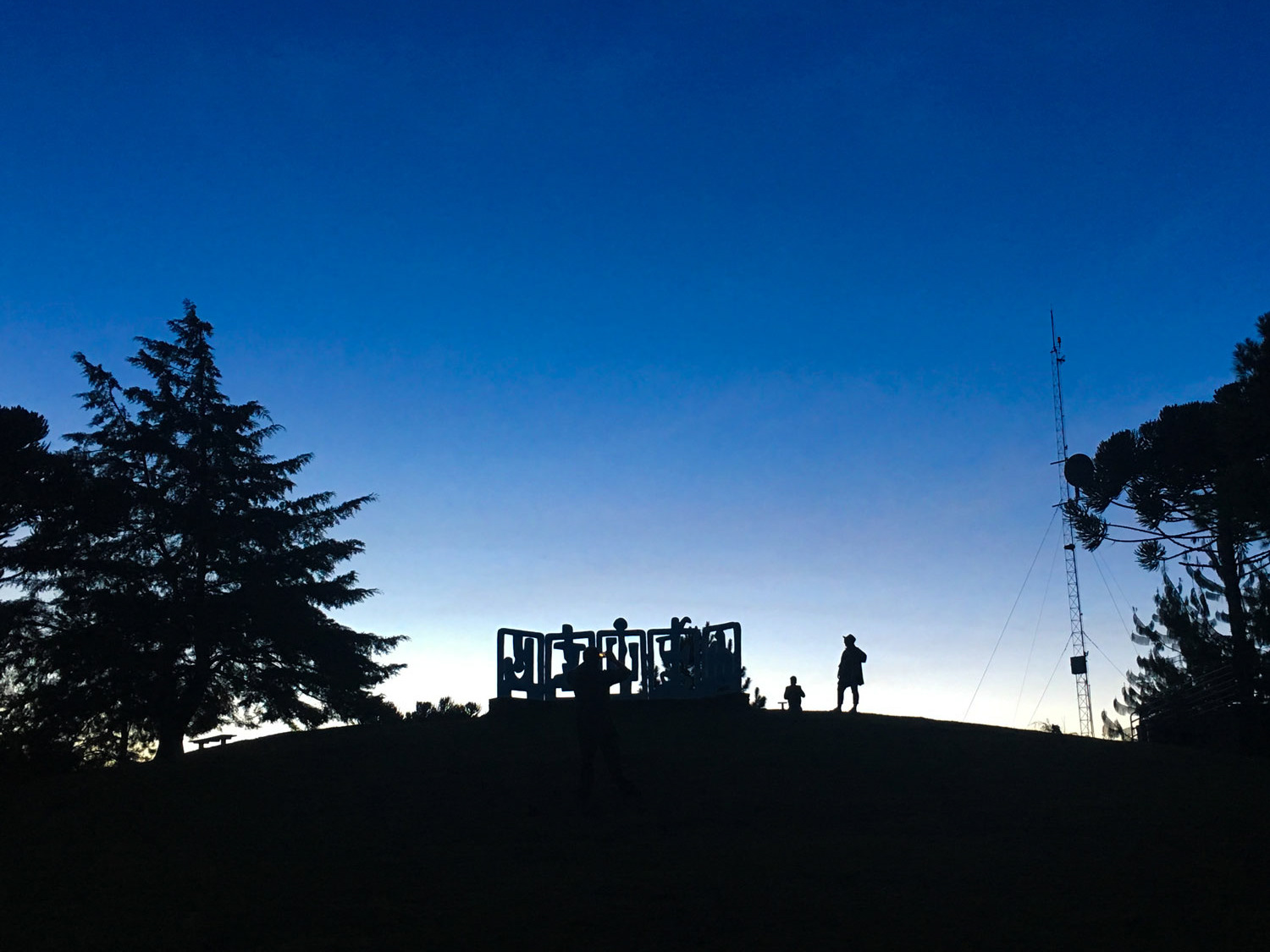
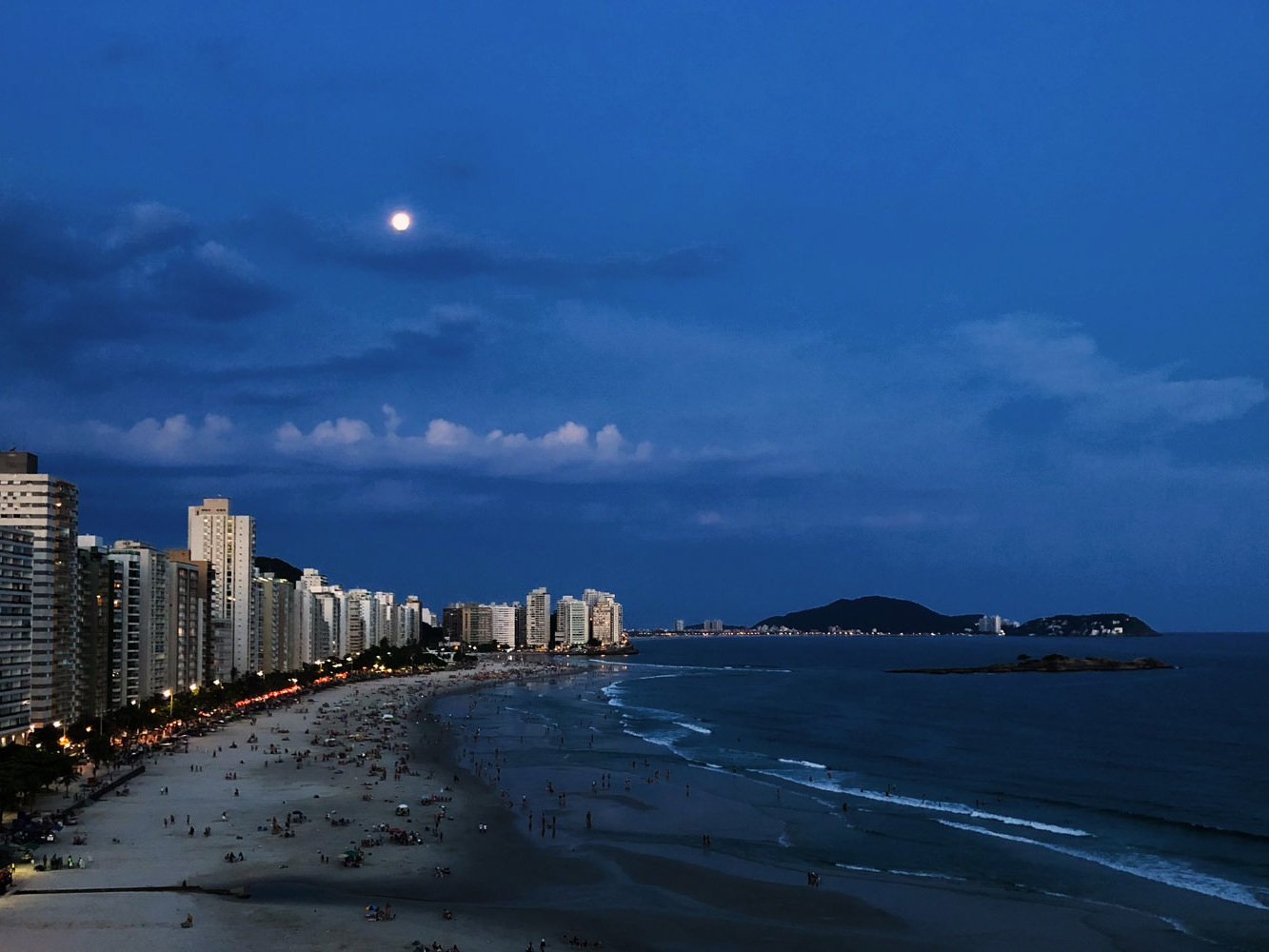
A Hora Azul reúne doze fotografias feitas na única faixa do dia em que duas luzes de origem oposta ocupam o mesmo céu. O sol já se pôs, mas ainda sobra claridade no alto; a iluminação pública já foi ligada embaixo. O intervalo dura minutos, muda a cada latitude e a cada estação, e é tecnicamente hostil — não há luz suficiente para um registro correto de paisagem.
A artista definiu esse intervalo com as próprias palavras ao corrigir o título de uma das obras: recusou chamá-la de noturna porque aquilo não era noite ainda. Não é a hora escura nem a hora dourada. É o vão entre as duas — e a série existe porque alguém decidiu trabalhar exatamente ali.
Não é a noite.
É o intervalo entre a tarde e a noite.
É o intervalo entre a tarde e a noite.
Uma coisa quente contra uma coisa fria
Ao documentar a sétima obra deste conjunto, diante de um céu em que o azul convivia com o rosa de nuvens ainda acesas, a artista reconheceu um par que se repetia e afirmou procurar sempre uma coisa quente contra uma coisa fria. Acrescentou, no mesmo registro, que na época em que fotografava não pensava nisso — que constata agora, olhando o conjunto reunido.
Essa é a lei da série, e ela não foi imposta de fora: foi encontrada. Explica por que duas das obras se chamam pelo par de temperaturas e são declaradas continuação uma da outra. Explica por que uma fotografia de anoitecer que a artista aprecia ficou fora do conjunto — tinha mais vermelho do que azul. O critério de pertencimento nunca foi o assunto nem o lugar; foi cromático.
Vale registrar o que isso significa em termos de trabalho. A artista não aplicava uma regra: tinha uma inclinação e não sabia. O que trouxe a regra à superfície foi olhar as próprias fotografias lado a lado — o gesto de organizar uma série produziu conhecimento que as imagens isoladas não davam.
O MÉTODO
Geometria contra relógio
Dois procedimentos exatos se alternam ao longo do conjunto. No primeiro, o enquadramento é fixo e o mundo tem de entrar nele: a árvore posicionada a um terço, a linha do horizonte decidida de antemão, e vários disparos até que as aves ocupem o lugar previsto. No segundo, o quadro é que se move — a artista caminha por uma orla até a fileira de luzes se alinhar com a lua, ou procura o ponto em que o satélite cabe num vão de copa.
Os dois convivem com uma pressão que a série impõe: o intervalo é curto. A artista mede um desses prazos em dois minutos, e observa que a lua se desloca muito mais depressa do que se imagina. Numa das obras ela fotografou a própria passagem, começando com o céu ainda rosa e seguindo até o azul, e depois escolheu o quadro correspondente ao estágio de que a série trata — ali a seleção deixou de ser preferência e virou definição de assunto.
Sobre o imprevisto, o conjunto mostra uma progressão. Diante de um reflexo de lente, a artista disse apenas que não atrapalhava. Diante de um barco que entrou no quadro sem convite, admitiu que não prejudicava e ainda situava o lugar. Diante de um vermelho derramado pela luz de uma estação de metrô, afirmou que a fotografia ficou melhor do que ela pretendia. Três veredictos sobre o acaso, do mais reservado ao mais generoso.
A luz não bastava.
Foi disso que a série foi feita.
A LINHAGEM
Onde este conjunto se apoia
A linhagem deste conjunto é o seu lastro. Cinco famílias se cruzam nas doze obras, e a fotógrafa não copia nenhuma delas — ocupa o lugar de cada uma por conta própria.
O crepúsculo pintado. Frederic Edwin Church e a Escola do Rio Hudson, que tira o nome do rio sobre o qual a primeira obra desta série foi feita; o Luminismo americano de Fitz Henry Lane, Martin Johnson Heade e John Frederick Kensett, com o horizonte baixo e a água refletora; os mais de cem estudos de nuvens que John Constable fez em Hampstead entre 1821 e 1822; e a lua em quarto crescente que Caspar David Friedrich transformou em objeto de contemplação.
A luz elétrica na cidade. Os nocturnos de James McNeill Whistler, já batizados por pares de cor; a Paris noturna que Brassaï publicou em 1932; a lâmpada de arco com que Giacomo Balla declarou o luar romântico superado; e Berenice Abbott, que calculou a exposição de uma vista noturna de Nova York para o dia mais curto do ano, única noite em que o céu escureceria a tempo de as luzes dos escritórios ainda estarem acesas.
A exposição insuficiente. Gustave Le Gray expondo pelo céu a partir de um só negativo em 1856; Peter Henry Emerson recusando a nitidez uniforme por julgá-la infiel ao olho humano; o grupo Provoke e o are-bure-boke, que fez do granulado matéria expressiva. E, no polo contrário da mesma família, o Grupo f/64, que em 1932 tomou o nome da abertura mínima e fez da definição absoluta uma posição.
A cor e a superfície. Ernst Haas, cujo ensaio em cor sobre Nova York levou a fotografia para o território do expressionismo abstrato; Saul Leiter e os vidros riscados de chuva; Claude Monet, para quem o assunto passou a ser a luz refletida na água e não o que estava sobre ela; e o tenebrismo, com o foco que recorta o essencial e entrega o resto ao escuro.
A silhueta e a escala. Edward Steichen e o crepúsculo emoldurado por árvores em silhueta; Piet Mondrian reduzindo uma árvore desfolhada a uma rede de linhas; Georges Seurat fazendo a figura emergir como mancha de um fundo luminoso; Kawase Hasui e a lua branca isolada num vão de copa.
A silhueta e a escala. Edward Steichen e o crepúsculo emoldurado por árvores em silhueta; Piet Mondrian reduzindo uma árvore desfolhada a uma rede de linhas; Georges Seurat fazendo a figura emergir como mancha de um fundo luminoso; Kawase Hasui e a lua branca isolada num vão de copa.
E, no extremo da distância, a Terra fotografada da Apollo 8 e as praias que Massimo Vitali observa do alto.
Cinco famílias, um só assunto: o que acontece quando a luz muda de dono.
AS DOZE OBRAS
Três movimentos
A numeração é de catálogo e segue a ordem em que as obras foram documentadas. A leitura do conjunto se organiza em três movimentos: aquelas em que as duas luzes dividem o quadro; aquelas em que o azul chega pela água; e aquelas em que o céu fica sozinho com a lua. As entradas abaixo avaliam o que cada imagem resolve e por que ela pertence ao conjunto.
MOVIMENTO I · AS DUAS LUZES
MOVIMENTO II · O AZUL NA ÁGUA
MOVIMENTO III · O CÉU E A LUA
POSICIONAMENTO
Por que esta série importa
Um assunto com hora marcada. Fotografia de entardecer é abundante e quase sempre decorativa. Esta série se distingue por trabalhar num intervalo estreito e verificável — o momento em que duas luzes de origem oposta dividem o céu — e por sustentar doze obras dentro dele sem repetir a solução. É um recorte que se explica em uma frase e resiste a doze exames.
A insuficiência assumida como método. Num mercado saturado de imagens tecnicamente impecáveis, este conjunto reúne uma fotografia subexposta, uma granulada e uma feita através de um para-brisa embaçado, ao lado de outra de definição integral — e a artista defende cada escolha em voz alta. Essa franqueza é rara na documentação de artistas e é, ela própria, um diferencial de posicionamento.
O que fica com quem compra. Adquirir uma destas fotografias não é adquirir um pôr do sol. Leva um intervalo do dia que a maioria das pessoas atravessa sem notar, fixado por alguém que passou cinquenta anos aprendendo a notá-lo — ancorado numa linhagem que vai de Constable a Provoke e num argumento que a autora enuncia sem constrangimento: ninguém preserva aquilo que não ama.
AS DOZE JUNTAS
O que a luz faz quando muda de dono
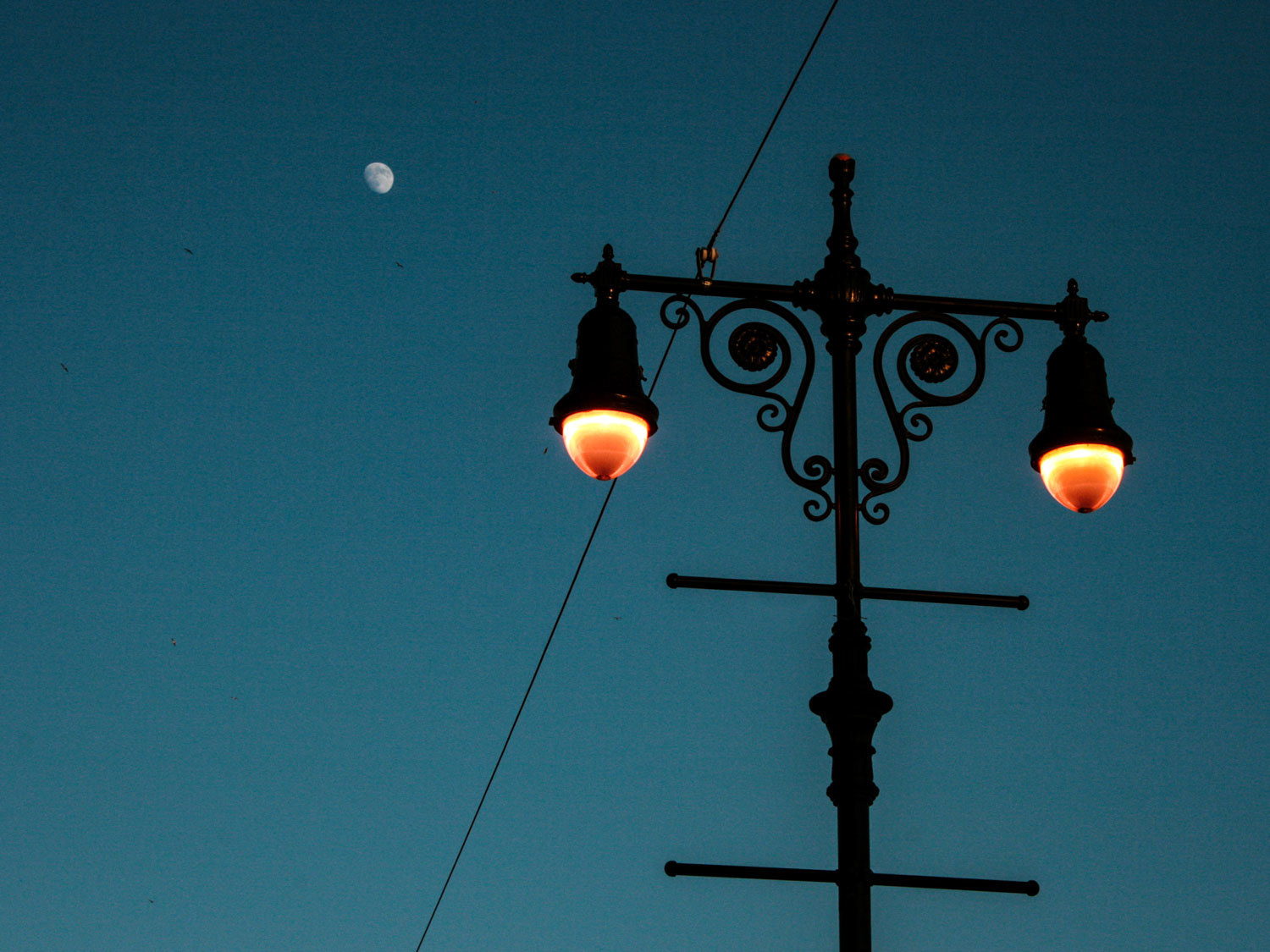
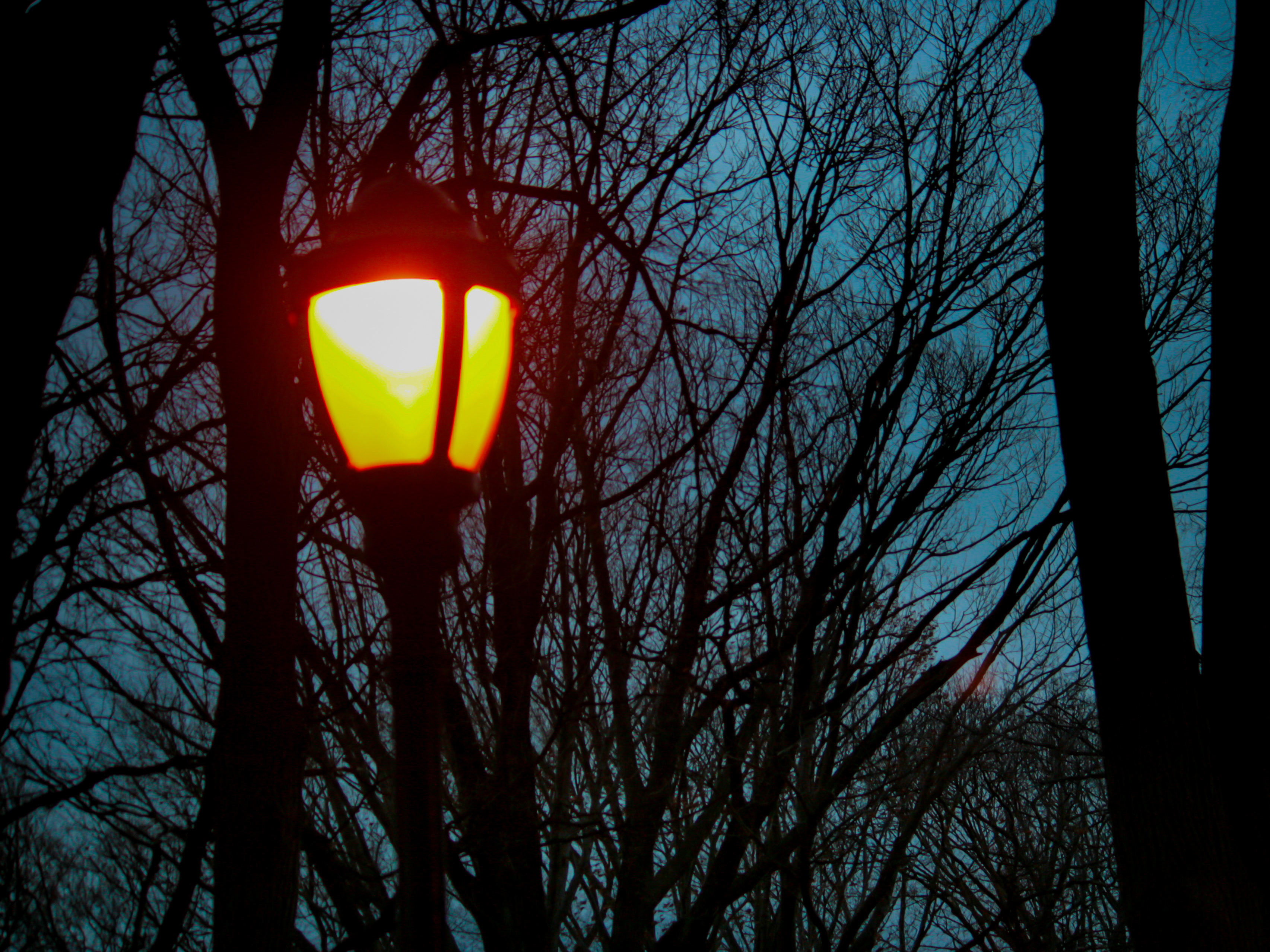
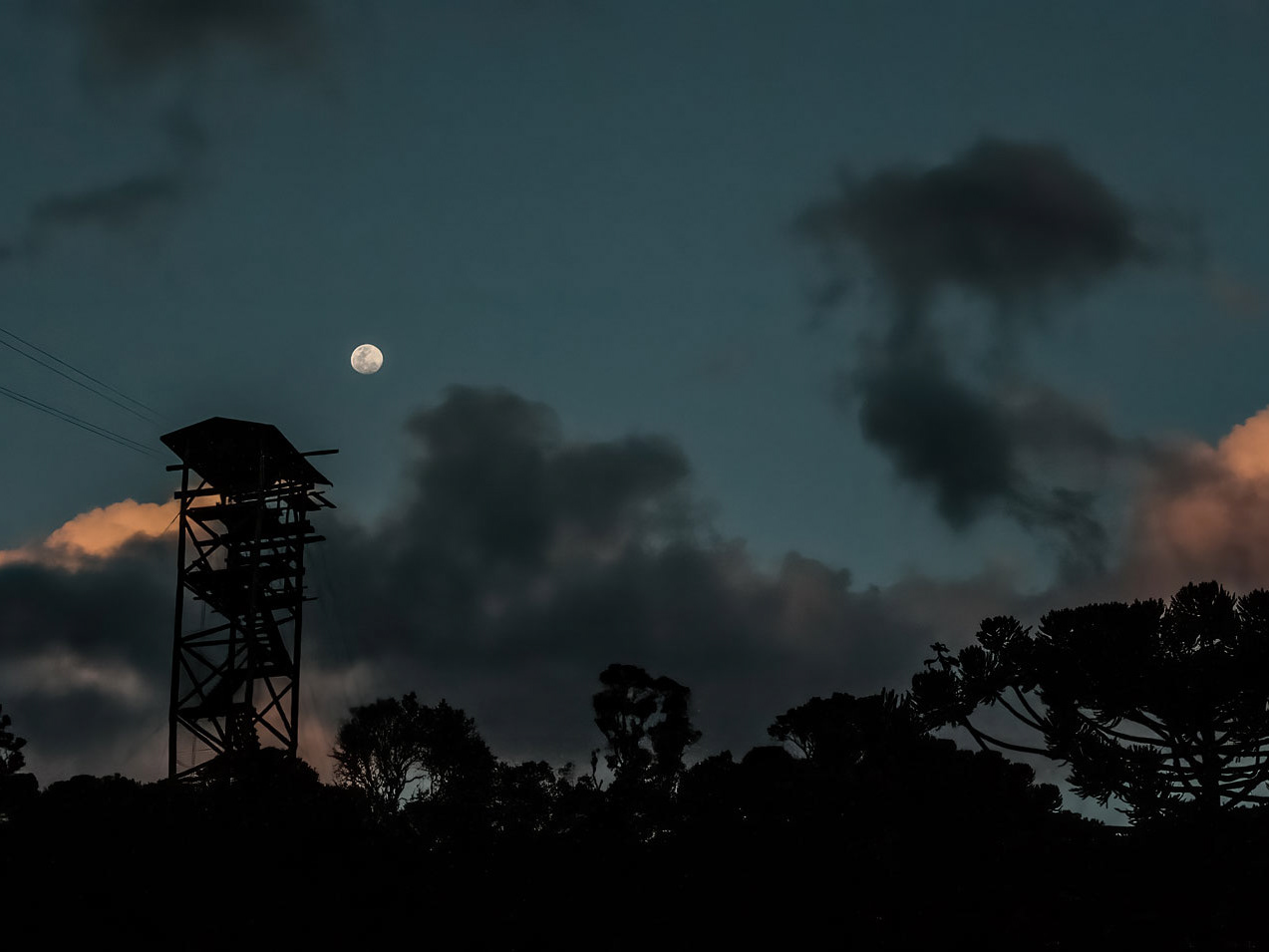
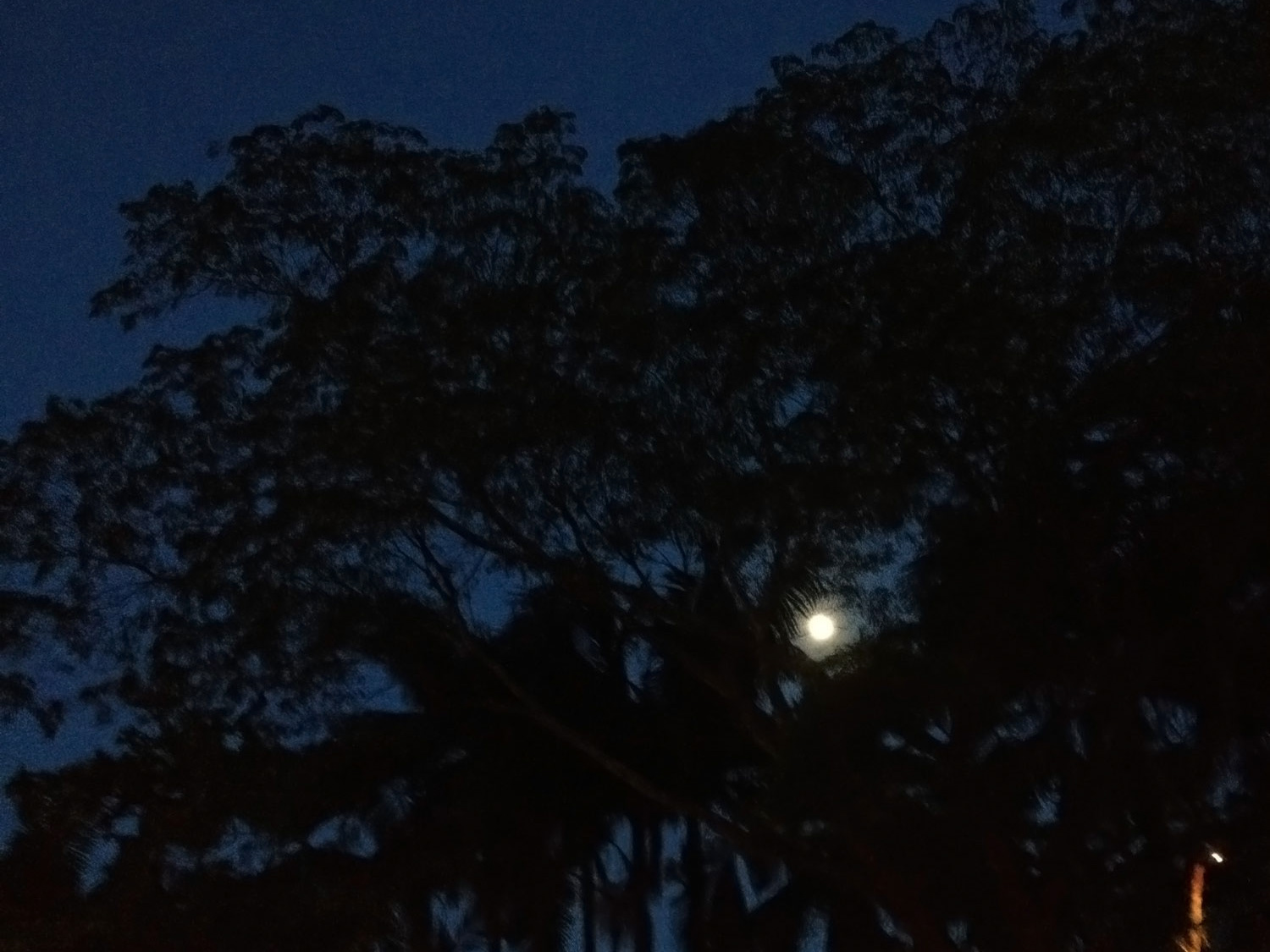
Vistas em sequência, as doze fotografias não formam um álbum de entardeceres: formam a descrição de um momento. Em todas elas alguma coisa está acabando em cima enquanto outra começa embaixo, e a artista não resolve a disputa — mantém as duas no quadro, com a mesma nitidez e o mesmo peso. Da lâmpada de um parque de Nova York à lua encaixada numa copa do litoral paulista, o assunto é sempre a passagem de comando entre uma luz e outra.
E o conjunto termina numa afirmação que as séries anteriores desta autora não fizeram. Diante de um morro cuja curva ela lê como o diagrama do planeta, a artista diz que ninguém preserva o que não ama e atribui às suas imagens a tarefa de fazer amar. Não é denúncia nem tese: é a beleza oferecida como argumento, por quem passou meio século reunindo provas.
Doze vezes o mesmo intervalo — e nenhuma pressa em escolher entre as duas luzes.
Consultoria Curatorial e Estratégica · Chirlei Bastos · Direção Curatorial
m
THE ARTIST
Fifty Years in Pursuit of a Color
Half a century of photography, preceded by a background in design and twenty years in art direction: this is where the most visible trait of this body of work comes from — an eye trained in proportion, determining, in almost every image, where the moon falls within the rectangle and how high the horizon line sits.
Her work is predominantly black and white, and the artist reserves a separate category for the few photographs in which color carries everything. This body of work is composed entirely of images from that category. It is therefore not just any selection from the archive: it brings together the photographs in which she stepped away from her more familiar territory.
The tools vary, but the eye does not. There is an image here made with a professional camera and complete sharpness, others made with an ordinary phone, and one made through the windshield of a car stopped in traffic. What recurs is neither the equipment nor the country: it is the time of day.
THE SERIES
An Interval of Minutes
The Blue Hour brings together twelve photographs made during the only span of the day when two lights of opposite origins occupy the same sky. The sun has already set, but daylight still lingers above; below, the city lights have already come on. The interval lasts only minutes, shifts with latitude and season, and is technically unforgiving — there is not enough light for a conventionally correct landscape exposure.
The artist defined this interval in her own words when correcting the title of one of the works: she rejected calling it a night photograph because it was not night yet. It is neither the dark hour nor the golden hour. It is the space between the two — and the series exists because someone decided to work precisely there.
It is not night.
It is the interval between afternoon and night.
It is the interval between afternoon and night.
THE RULE
Something Warm Against Something Cold
While documenting the seventh work in this series, looking at a sky in which blue coexisted with the pink of clouds still catching the light, the artist recognized a pairing that kept recurring and said that she is always looking for something warm against something cold. In the same account, she added that she was not thinking about this when she took the photographs — she sees it now, looking at the series brought together.
This is the rule of the series, and it was not imposed from outside: it was found. It explains why two of the works are named after this pair of temperatures and are explicitly described as continuations of one another. It explains why a dusk photograph the artist likes was left out of the series — it had more red than blue. The criterion for belonging was never the subject or the place; it was chromatic.
It is worth noting what this means in terms of the work itself. The artist was not applying a rule: she had an inclination and did not know it. What brought the rule to the surface was seeing her own photographs side by side — the act of organizing a series produced knowledge that the individual images did not.
THE METHOD
Geometry Against the Clock
Two precise procedures alternate throughout the series. In the first, the frame is fixed and the world has to enter it: the tree positioned one-third of the way across, the horizon line determined in advance, and several shots taken until the birds occupy the intended place. In the second, it is the frame that moves — the artist walks along a waterfront until the row of lights aligns with the moon, or searches for the point from which the satellite fits into an opening in the canopy.
Both operate under a pressure imposed by the series: the interval is brief. The artist measures one such window at two minutes and observes that the moon moves much faster than one imagines. In one of the works, she photographed the passage itself, beginning with the sky still pink and continuing into the blue, then selected the frame corresponding to the stage the series is concerned with — at that point, selection ceased to be a matter of preference and became a definition of subject.
In its treatment of the unforeseen, the series reveals a progression. Faced with a lens flare, the artist merely said that it did not get in the way. Faced with a boat that entered the frame uninvited, she acknowledged that it did no harm and even helped locate the scene. Faced with red light spilling from a subway station, she said that the photograph turned out better than she had intended. Three verdicts on chance, from the most reserved to the most generous.
There was not enough light.
That is what the series was made from.
That is what the series was made from.
THE LINEAGE
Where This Body of Work Finds Its Ground
The lineage of this body of work is its foundation. Five families intersect across the twelve works, and the photographer copies none of them — she arrives at each on her own terms.
The painted twilight. Frederic Edwin Church and the Hudson River School, which takes its name from the river over which the first work in this series was made; the American Luminism of Fitz Henry Lane, Martin Johnson Heade, and John Frederick Kensett, with its low horizons and reflective waters; the more than one hundred cloud studies John Constable made at Hampstead between 1821 and 1822; and the crescent moon that Caspar David Friedrich turned into an object of contemplation.
Electric light in the city. James McNeill Whistler’s Nocturnes, already titled in pairs of colors; the nocturnal Paris Brassaï published in 1932; the arc lamp with which Giacomo Balla declared romantic moonlight surpassed; and Berenice Abbott, who calculated the exposure for a nighttime view of New York for the shortest day of the year, the one night when the sky would darken early enough for the office lights still to be on.
Insufficient exposure. Gustave Le Gray exposing for the sky from a single negative in 1856; Peter Henry Emerson rejecting uniform sharpness as unfaithful to human vision; the Provoke group and are-bure-boke, which made graininess an expressive material. And, at the opposite pole of the same family, Group f/64, which in 1932 took its name from the smallest aperture and made absolute sharpness an aesthetic position.
Color and surface. Ernst Haas, whose color essay on New York brought photography into the territory of Abstract Expressionism; Saul Leiter and rain-streaked glass; Claude Monet, for whom the subject became the light reflected on the water rather than what was upon it; and Tenebrism, with its concentrated light isolating what matters and surrendering the rest to darkness.
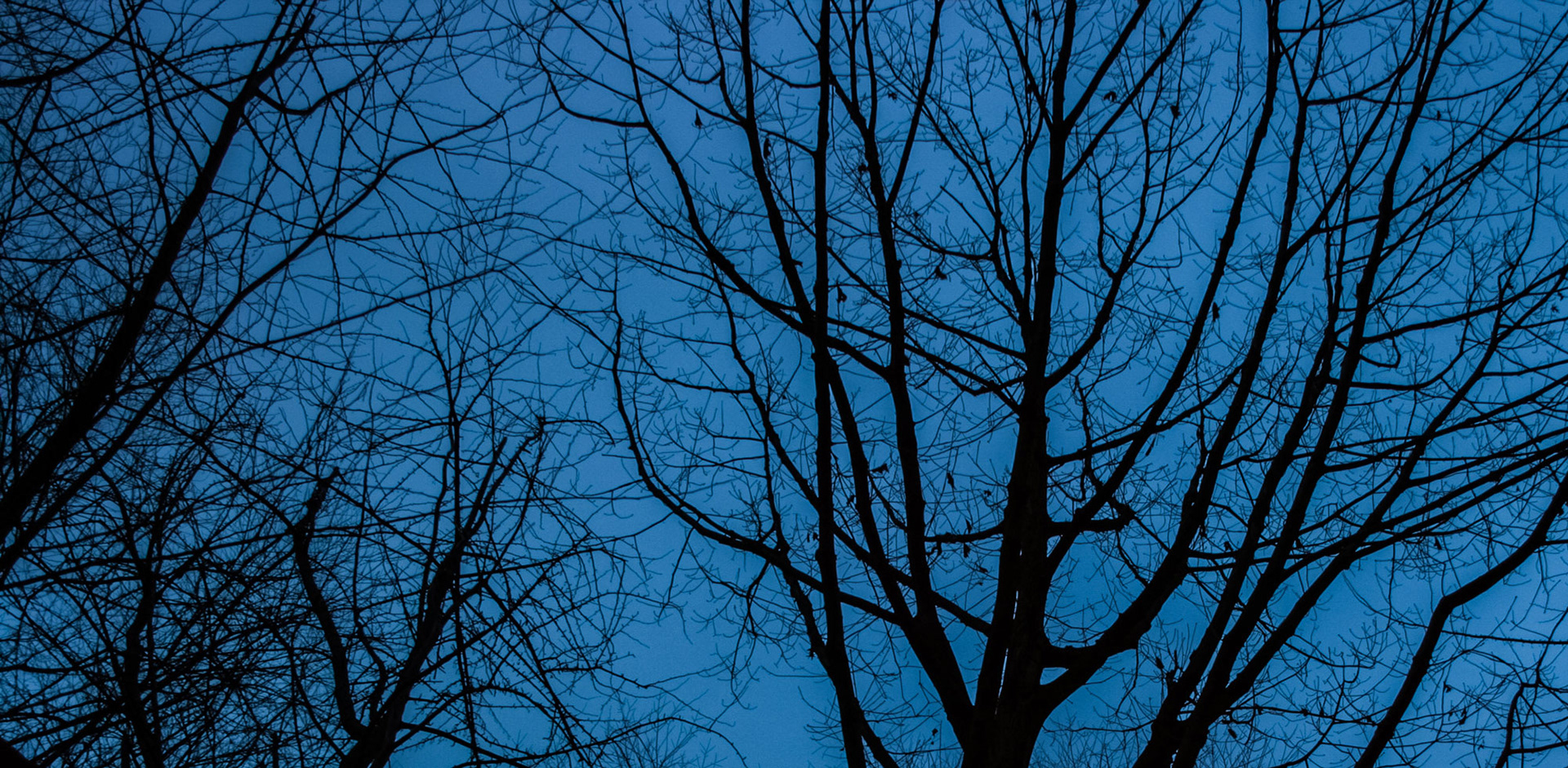
Silhouette and scale. Edward Steichen and twilight framed by silhouetted trees; Piet Mondrian reducing a leafless tree to a network of lines; Georges Seurat making the figure emerge as a shape against a luminous ground; Kawase Hasui and the white moon isolated in an opening in the canopy.
And, at the farthest extreme of distance, the Earth photographed from Apollo 8 and the beaches Massimo Vitali observes from above.
Five families, one subject: what happens when light changes hands.
THE TWELVE WORKS
Three Movements
The numbering is catalog-based and follows the order in which the works were documented. The series unfolds in three movements: those in which the two lights divide the frame; those in which the blue arrives through the water; and those in which the sky is left alone with the moon. The entries below consider what each image resolves and why it belongs in the series.
MOVEMENT I · THE TWO LIGHTS
MOVEMENT II · BLUE IN THE WATER
MOVEMENT III · THE SKY AND THE MOON
POSITIONING
Why This Series Matters
A subject with a narrow window. Dusk photography is abundant and often decorative. This series distinguishes itself by working within a narrow, identifiable interval — the moment when two lights of opposite origins share the sky — and by sustaining twelve works within it without repeating the same solution. It is a premise that can be explained in a single sentence and withstands twelve examinations.
Insufficiency embraced as method. In a market saturated with technically flawless images, this body of work brings together an underexposed photograph, a grainy one, and one made through misted glass, alongside another of complete sharpness — and the artist openly stands by each choice. Such candor is rare in the way artists document their work and is itself part of what distinguishes the series.
What the collector takes with them. To acquire one of these photographs is not to acquire a sunset. It is to take with you an interval of the day that most people pass through without noticing, fixed by someone who has spent fifty years learning to notice it — anchored in a lineage that runs from Constable to Provoke and in an argument the artist states without hesitation: no one preserves what they do not love.
THE TWELVE TOGETHER
What Light Does When It Changes Hands
Seen in sequence, the twelve photographs do not form an album of sunsets: they describe a moment. In every one, something is ending above while something else begins below, and the artist does not resolve the tension — she keeps both in the frame, with equal clarity and equal weight. From a lamp in a New York park to the moon nestled into an opening in the canopy on the São Paulo coast, the subject is always the handover from one light to another.
And the series ends with a statement that the artist’s previous series have not made. Faced with a hillside whose curve she reads as a diagram of the planet, the artist says that no one preserves what they do not love, and gives her images the task of making people love. It is neither denunciation nor thesis: it is beauty offered as an argument, by someone who has spent half a century gathering evidence.
The same interval, twelve times — and no hurry to choose between the two lights.
Curatorial and Strategic Consulting · Chirlei Bastos · Curatorial Direction